 how-to
How to Fix Chronic Neck Stiffness: 7 Steps That Work
Table of Contents
- Why Your Neck Stays Stiff: Causes and What Keeps It Going
- Exercises for Chronic Neck Stiffness: A Daily Mobility Routine
- Ergonomic Adjustments for Neck Pain at Your Desk and Beyond
- When to See a Doctor for Neck Pain: Red Flags and Professional Care
- Heat, Cold, and Other Home Therapies for Relief
- Sleep and Stress: The Hidden Drivers of Neck Tension
- Building a Long-Term Plan to Keep Your Neck Mobile
- Frequently Asked Questions
Last Updated: September 15, 2026
Why Your Neck Stays Stiff: Causes and What Keeps It Going
Chronic neck stiffness is persistent tightness, restricted motion, or aching in the cervical spine lasting longer than a few weeks, and it usually has more than one driver. This guide from The Powerful Body offers insights into managing it. (Source: the National Institute of Neurological Disorders and Stroke)
The cervical vertebrae and surrounding muscles are built for movement. Hours of forward head posture load the same tissue fibers day after day. Muscle strain sets in, inflammation follows, and the cycle repeats.
What keeps it going is rarely one dramatic injury. It's the accumulation:
- Sustained desk posture with the head forward of the shoulders
- Shallow breathing that keeps neck muscles switched on all day
- Poor sleep positions that re-load tissue for eight hours
- Stress that produces unconscious shoulder elevation and jaw clenching
Exercises for Chronic Neck Stiffness: A Daily Mobility Routine
The best routine for chronic neck stiffness takes under ten minutes and happens daily. Consistency beats intensity: a short daily session outperforms an aggressive one every few days.
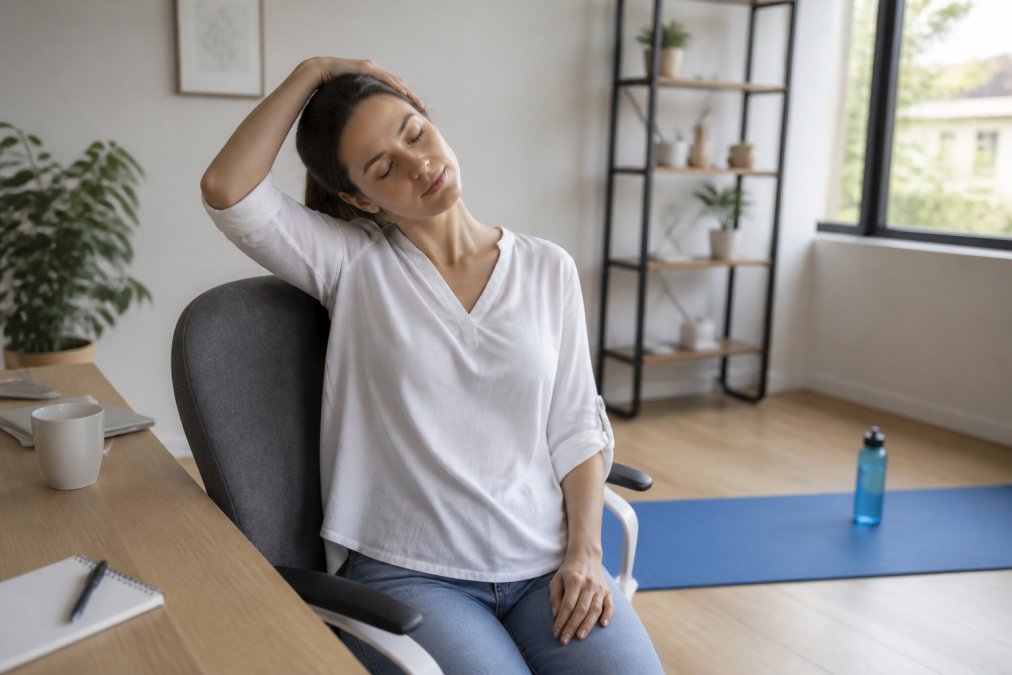
Before You Start: Warm the Tissue First
Cold, stiff tissue does not stretch well. Spend two to three minutes warming it first: a warm shower, a heating pad on the upper back and neck for 10-15 minutes, or walking while swinging the arms. Warm tissue has more give and less strain risk.
Step-by-Step Stretching Sequence
Move slowly through each step. Never bounce or push into pain: a mild stretch sensation is the target, sharp pain a stop signal.
Step 1: Chin tucks (10 reps, 3-second hold). Sit tall, draw the chin straight back as if making a double chin. This activates the deep cervical flexors and counters forward head posture. Keep the jaw relaxed, clenching defeats the purpose.
Step 2: Slow neck rotations (5 each direction, 3-second hold at end range). Turn the head left, pause, return to center, turn right. If one direction is tighter, add one extra rep on that side only.
Step 3: Side bends (5 each side, 15-second hold). Bring the ear toward the shoulder without lifting it. You should feel a stretch, not pinching; if you feel pinching, reduce the range.
Step 4: Shoulder blade squeezes (10 reps, 3-second hold). Pull the shoulder blades down and together. This addresses the upper back, which drives much of the neck's load. Think "down and back," not "up and together."
Step 5: Doorway chest stretch (30 seconds each side). Place the forearm on a doorframe, step through gently. Tight chest muscles pull the shoulders forward and the neck follows. Keep the ribs down so the low back does not arch.
Step 6: Levator scapulae stretch (30 seconds each side). Turn the head about 45 degrees toward one armpit, then gently look down. This targets the muscle running from neck to shoulder blade, a common culprit in desk workers.
How to Progress Over Four Weeks
- Week 1: One round daily. Focus on smooth motion and breathing, not range.
- Week 2: Two rounds daily. Add the levator scapulae stretch if it was not already included.
- Week 3: Hold stretches for 20-30 seconds instead of 15. Add one rep to chin tucks and shoulder blade squeezes.
- Week 4: Add light resistance to the strengthening steps, a resistance band for shoulder blade squeezes, or a light dumbbell for rows if cleared by a clinician.
Expected result: Improved range of motion within two weeks of daily practice, with upper-back strength gains around weeks four to six. If any movement causes sharp pain, numbness, or tingling into the arm, stop and see a clinician.
The Mistake That Undoes the Routine
Most people stretch hard once, feel relief, then return to the same posture all day, so the tissue never adapts. The routine works only when paired with the ergonomic and sleep changes below.
Ergonomic Adjustments for Neck Pain at Your Desk and Beyond
Ergonomic adjustments for neck pain start with one rule: the screen should sit at eye level so the head stays stacked over the shoulders. Most desk setups fail by several inches.
Conducting a Simple Workstation Audit
Run this five-point check today:
- Monitor height: Top of the screen at or just below eye level
- Monitor distance: Arm's length away, roughly 20-30 inches
- Chair support: Lumbar curve supported, feet flat on the floor
- Keyboard position: Elbows at roughly 90 degrees, wrists neutral
- Phone habits: Raise the phone instead of dropping the chin to text
The phone point matters more than people expect: hours looking down at a device load the cervical spine far more than a well-set monitor will.
Office workers often experience this: perfect chair, terrible phone posture. The desk audit fixes half the problem; the other half happens everywhere else.
When to See a Doctor for Neck Pain: Red Flags and Professional Care
When to see a doctor for neck pain comes down to specific warning signs, not duration alone. Most stiffness responds to movement and ergonomic changes; some symptoms need imaging and clinical evaluation.
Seek prompt medical care if you notice:
- Pain, numbness, or weakness radiating into the arm or hand, which can point to nerve impingement or cervical radiculopathy
- Severe headache with a stiff neck, fever, or confusion
- Stiffness after a fall, car accident, or impact injury
- Loss of bladder or bowel control, or unsteady walking
- Unexplained weight loss alongside neck pain (Source: the American Physical Therapy Association)
For persistent stiffness without red flags, a clinician can assess spinal alignment, muscle spasms, and joint mobility. MedlinePlus neck pain overview outlines when symptoms warrant medical attention.
Conservative treatment, including physical therapy and rehabilitation, resolves most cases; a physical therapist can build a strength and mobility plan matched to your deficits. For chronic pain that hasn't responded to standard care, an integrated approach may help.
Heat, Cold, and Other Home Therapies for Relief
Heat and cold therapy work differently, and using the wrong one at the wrong time can slow relief. Cold reduces acute inflammation in the first 48 hours after a strain; heat increases blood flow and relaxes chronic, stiff tissue.
For long-standing stiffness without a fresh injury, heat is usually the better start. A warm shower, heating pad, or moist towel for 15-20 minutes before stretching helps tissue move more comfortably.
Other home options that many people find useful:
- Trigger point work: A tennis ball against a wall on tight upper-back spots
- Myofascial release: Slow, sustained pressure on tender areas, not aggressive rolling
- Gentle movement breaks: Standing and moving every 30-45 minutes
- Over-the-counter pain relief: Short-term use for flare-ups, per label directions
One caution: heat should not be applied to numb skin or over areas with reduced sensation. If you have diabetes or circulation issues, check with a clinician first.
Sleep and Stress: The Hidden Drivers of Neck Tension
Sleep hygiene and stress reduction do more for chronic neck stiffness than most people expect.
Pillow Selection by Sleeping Position
Mattress Considerations
A Simple Pillow Test
The Psychosomatic Link: How Stress Braces the Neck
Signs you may be bracing without realizing it:
Breaking the Bracing Pattern
Building a Long-Term Plan to Keep Your Neck Mobile
Here's how to structure the week:
| Focus | Frequency | Time Needed |
|---|---|---|
| Mobility routine | Daily | 5-10 minutes |
| Strength training (upper back, shoulders) | 2-3x per week | 20-30 minutes |
| Ergonomic check-in | Weekly | 5 minutes |
| Sleep setup review | Monthly | 10 minutes |
| Stress reduction practice | Daily | 5 minutes |
Frequently Asked Questions
What are the common causes of chronic neck stiffness?
Chronic neck stiffness usually stems from a combination of poor posture, muscle strain, and joint dysfunction. Prolonged desk work, looking down at phones, and stress-related muscle tension are frequent culprits. Underlying conditions like cervical arthritis, disc degeneration, or nerve impingement can also contribute. Unlike acute stiffness that resolves in days, chronic stiffness persists for weeks or months and often requires a multifaceted approach that addresses ergonomics, movement patterns, and overall spinal health.
How long does it take to fix chronic neck stiffness with exercises?
Most people notice improvement within two to four weeks of consistent daily stretching and strengthening, but full resolution can take longer depending on the cause. A routine that includes range-of-motion exercises, posture correction, and ergonomic adjustments is key. If stiffness persists beyond six weeks despite home care, a professional evaluation can identify whether underlying issues like cervical radiculopathy or myofascial trigger points need targeted treatment.
Can ergonomic adjustments alone cure chronic neck stiffness?
Ergonomic adjustments are a critical piece of the puzzle, but they rarely resolve chronic stiffness on their own. They reduce daily strain on the cervical spine, yet muscles that have already tightened and weakened need targeted exercise and sometimes manual therapy. Combining ergonomic fixes with a stretching and strength-training routine gives the best results. For lasting relief, address both the workspace and the body's movement habits.
When should I see a doctor for chronic neck pain?
See a doctor if your neck stiffness is accompanied by severe pain, numbness, weakness in your arms or hands, or if it follows an injury. Also seek care if you have fever, unexplained weight loss, or loss of bladder control, as these can signal a more serious condition. For stiffness that lingers beyond a few weeks without improvement, a professional evaluation can rule out nerve impingement or cervical spine issues and guide appropriate conservative treatment.