 How-to
Book Professional Pain Relief Consultation: A Patient's Guide
Table of Contents
- Why Book a Professional Pain Relief Consultation
- What to Expect at a Pain Management Appointment
- Questions to Ask a Pain Specialist
- How to Prepare for Your Pain Relief Consultation
- Recovery Timeline for Ligament Tears and Other Common Conditions
- Your Post-Consultation Roadmap
- Telehealth vs. In-Person Pain Management Consultations
- External Links & Sources
- Frequently Asked Questions
Last Updated: September 25, 2026
Why Book a Professional Pain Relief Consultation
Chronic pain doesn't resolve on its own. Neither do the treatment approaches that worked five years ago. A professional pain relief consultation is your first step toward understanding what's actually causing your discomfort and what evidence-based options exist to address it at the source rather than mask symptoms temporarily.
Many people try physical therapy, over-the-counter medications, or general chiropractic care without lasting results. That's because these approaches often treat the symptom, not the underlying problem. A specialized pain relief consultation with a qualified provider, one with clinical expertise in musculoskeletal conditions, diagnostic assessment, and treatment modalities, changes that equation entirely.
At The Powerful Body: Chiropractic & Massage, we've worked with patients who've spent years cycling through treatments without improvement. The common thread: they never had a comprehensive diagnostic evaluation or a personalized care plan designed specifically for their condition. When you book a professional pain relief consultation, you're investing in clarity. You'll understand your diagnosis and your options.
What to Expect at a Pain Management Appointment
Walking into a pain management appointment without knowing what happens next adds unnecessary anxiety. Understanding the structure removes that uncertainty and helps you prepare mentally and practically for the visit.

Initial Health History and Assessment
Your appointment begins with a detailed conversation about your health history. The provider will ask about your current pain, where it is, how long you've had it, what makes it worse or better, and what treatments you've already tried. They'll also ask about past injuries, surgeries, medical conditions, medications, and lifestyle factors that might contribute to your pain.
This isn't casual conversation. Every detail matters. A desk job that keeps you hunched forward for eight hours daily is relevant. A car accident from five years ago that you thought resolved is relevant. Previous failed treatments are relevant because they narrow the diagnostic possibilities and inform what approach might actually work for you.
Physical Examination and Diagnostic Evaluation
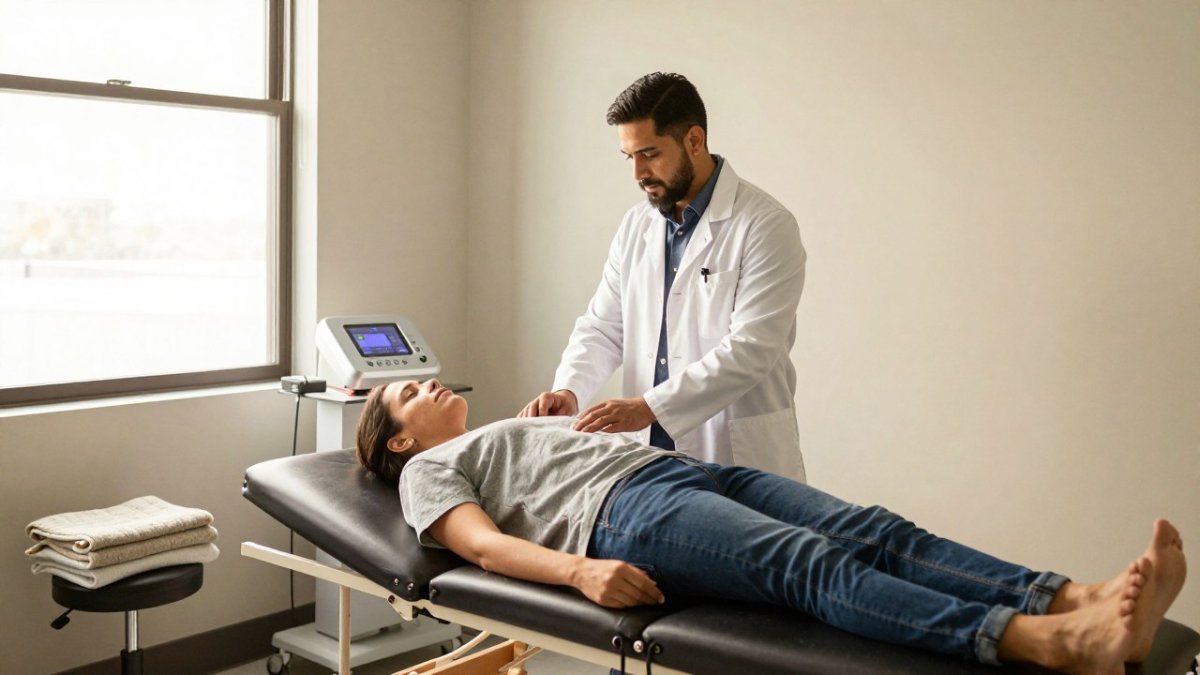
After the history, the provider performs a hands-on physical examination. They'll assess your range of motion, test specific movements that provoke or relieve pain, palpate affected areas, and evaluate your posture and alignment. This clinical assessment reveals patterns invisible to you but critical to diagnosis.
Depending on your condition, diagnostic evaluation might include imaging (X-rays, MRI) or other tests. Some providers order these during the initial visit; others gather the clinical assessment first and order imaging only if needed. Either way, this diagnostic evaluation establishes what's actually wrong, not what you assume is wrong.
Discussion of Treatment Modalities
Once the provider understands your condition, they discuss treatment options. This is where your pain relief consultation becomes truly personalized. Rather than offering a one-size-fits-all protocol, a skilled provider explains multiple approaches: conservative treatment like physical therapy and manual care, minimally invasive procedures, medication management, or combinations of these.
They'll explain what each option involves, realistic timelines for improvement, potential risks, and why they recommend one approach over others for your specific situation. This discussion is your opportunity to ask questions and ensure you understand the plan before committing.
Questions to Ask a Pain Specialist
Asking the right questions transforms a passive appointment into an active partnership. Write these down before you arrive, and take notes during the visit.
- What is your specific diagnosis, and what evidence supports it?
- What is the root cause of my pain, and how will your treatment address it?
- What treatment modalities do you recommend for my condition, and why these over alternatives?
- How long will treatment typically take before I notice improvement?
- What should I expect during the first week, first month, and first three months?
- Are there activities or movements I should avoid during treatment?
- How will you measure progress, and how often will we reassess the plan?
- What happens if the initial approach isn't working after four to six weeks?
- Do you work with my insurance, and what are the out-of-pocket costs I should expect?
- What can I do at home between appointments to support healing?
These questions shift the conversation from "Here's what I'm going to do" to "Here's what we're going to do together." A good provider welcomes them.
How to Prepare for Your Pain Relief Consultation
Preparation determines how much value you extract from your appointment. The more organized you are, the more efficiently the provider can assess and diagnose.
Gather Your Medical Records and Health History
Before your appointment, collect relevant medical records: imaging results (X-rays, MRI, CT scans), lab work, previous diagnoses, and documentation of past treatments. If you've seen other providers for this pain or related conditions, request those records. Bring a list of current medications and supplements with dosages.
This documentation saves time and gives the provider context they can't get from your verbal description alone. It also prevents the provider from ordering duplicate tests you've already had.
Document Your Pain Triggers and Symptom Patterns
Spend a few days, or a week if possible, tracking when your pain is worse or better. Note specific activities, times of day, weather, stress levels, or positions that affect your symptoms. Write down how pain impacts your daily life: sleep quality, work performance, exercise capacity, or social activities.
This symptom pattern documentation is invaluable. It reveals triggers and patterns that might not be obvious during a single appointment but are critical to diagnosis and treatment planning.
Create a Patient-Provider Communication Checklist
Write down your main concerns and goals for treatment. What matters most to you: reducing pain, improving mobility, returning to exercise, or something else? What have you already tried, and what were the results? What are your fears or hesitations about treatment?
This checklist ensures you communicate clearly and don't forget important details in the moment. It also signals to the provider that you're serious and engaged, which influences how thoroughly they engage with your case.
Recovery Timeline for Ligament Tears and Other Common Conditions
Recovery timelines vary dramatically based on the severity of injury, your age, overall health, and the treatment approach. Understanding realistic expectations prevents disappointment and helps you stay committed to the process.
Mild ligament sprains typically show noticeable improvement within two to four weeks of appropriate treatment.
Your Post-Consultation Roadmap
Your pain relief consultation doesn't end when you leave the office. What happens next determines whether you actually heal or simply repeat the cycle.
Understanding Your Personalized Care Plan
Your provider should give you a written care plan that includes your diagnosis, the recommended treatment approach, frequency of appointments, expected duration of treatment, home care instructions, and clear milestones for reassessment.
Insurance Verification and Payment Information
Before leaving the office, clarify insurance coverage, copays, deductibles, and any out-of-pocket costs. Ask whether the provider participates with your insurance plan and whether prior authorization is required for any treatments.
Telehealth vs. In-Person Pain Management Consultations
Telehealth offers convenience. In-person visits offer diagnostic depth. The right choice depends on your specific situation and what you need from the consultation.
| Preparation Step | What to Do | Why It Matters |
|---|---|---|
| Gather Medical Records | Collect imaging, lab work, previous diagnoses | Prevents duplicate tests; gives provider full context |
| Document Symptom Patterns | Track pain triggers, times, activities affecting symptoms | Reveals patterns critical to accurate diagnosis |
| List Your Questions & Goals | Write concerns, previous treatments tried, desired outcomes | Ensures clear communication; signals engagement |
| Clarify Insurance & Costs | Confirm coverage, copays, out-of-pocket expenses | Prevents financial surprises that derail treatment |
External Links & Sources
The information in this guide is grounded in clinical best practices recognized across the healthcare field. For additional guidance on pain management and treatment planning, consult the American Academy of Physical Medicine and Rehabilitation, which provides evidence-based standards for pain assessment and treatment. The National Institutes of Health Pain Management Research offers comprehensive resources on pain conditions and treatment outcomes.
Frequently Asked Questions
What should I bring to my pain relief consultation?
Bring a photo ID, insurance card, and any medical records from previous providers who have treated your condition. Write down your current medications, supplements, and any allergies. Prepare a list of your pain triggers, when symptoms started, and what treatments you've already tried. This information helps your pain specialist conduct a thorough diagnostic evaluation and develop an effective care plan tailored to your needs.
How long does a typical pain management appointment take?
Your first consultation usually takes 60 to 90 minutes. This allows time for a complete health history review, physical examination, and discussion of treatment modalities. Follow-up appointments are typically shorter, ranging from 30 to 45 minutes. The exact length depends on the complexity of your condition and whether diagnostic imaging or additional clinical assessment is needed during your visit.
What is the recovery timeline for ligament tears with professional treatment?
Recovery depends on the severity of the tear and your treatment approach. Minor sprains typically improve within 2 to 4 weeks with conservative treatment like rest and physical therapy. Moderate tears may require 6 to 8 weeks or longer. Severe tears can take several months. A pain specialist creates a personalized recovery journey with functional restoration exercises to support healing and restore mobility.
Do I need a referral to book a professional pain relief consultation?
Many insurance plans do not require a referral for a consultation with a pain specialist or chiropractor, though some policies may. Contact your insurance provider or call the clinic directly to verify your specific coverage requirements. Even without a referral, you can schedule an initial consultation. The clinic's staff can help verify your insurance benefits and explain any out-of-pocket costs before your visit.