 How-to
Red Light Therapy Results After 1 Month: What to Expect
Last Updated: November 24, 2026
Quick Summary
Red light therapy results after 1 month are real but modest, with most people noticing early changes in skin texture and tone rather than dramatic transformations. First visible improvements typically appear at 3 to 4 weeks of consistent use, while measurable structural change takes 8 to 12 weeks.
- At one month you are roughly halfway to the elasticity and tone gains seen in a two-month study.
- Start with three to five sessions per week and keep each session short.
- More sessions do not speed up results, and overuse can irritate skin.
- Take photos in the same room, light, and angle to track progress objectively.
- Hair growth results take several months, so judge a hair protocol at three to six months.
Table of Contents
- Red Light Therapy Results After 1 Month: The Honest Timeline
- How Red Light Therapy Works and Why the First Month Matters
- Red Light Therapy Before and After: What Changes Are Realistic
- How Long to See Results from Red Light Therapy on Face
- Red Light Therapy Results After 1 Month for Wrinkles
- How Long to See Results from Red Light Therapy for Hair Growth
- Tracking Progress: Objective Ways to Measure Your First Month
- Building Your 30-Day Protocol with Professional Support
- Frequently Asked Questions
Red Light Therapy Results After 1 Month: The Honest Timeline
Red light therapy results after 1 month are real but modest. Most people notice early changes in skin texture and tone, not dramatic transformations. According to peer-reviewed photobiomodulation research, a two-month course of treatment produced a 12.5% increase in skin elasticity and a 32.7% increase in skin tone. At the one-month mark, you are roughly halfway to those numbers.
Here is the part most guides skip: one month is a checkpoint, not a finish line. The Brillare Beauty Institute guidance on treatment frequency puts the first visible improvements at 3 to 4 weeks of consistent use. Measurable structural change takes 8 to 12 weeks.
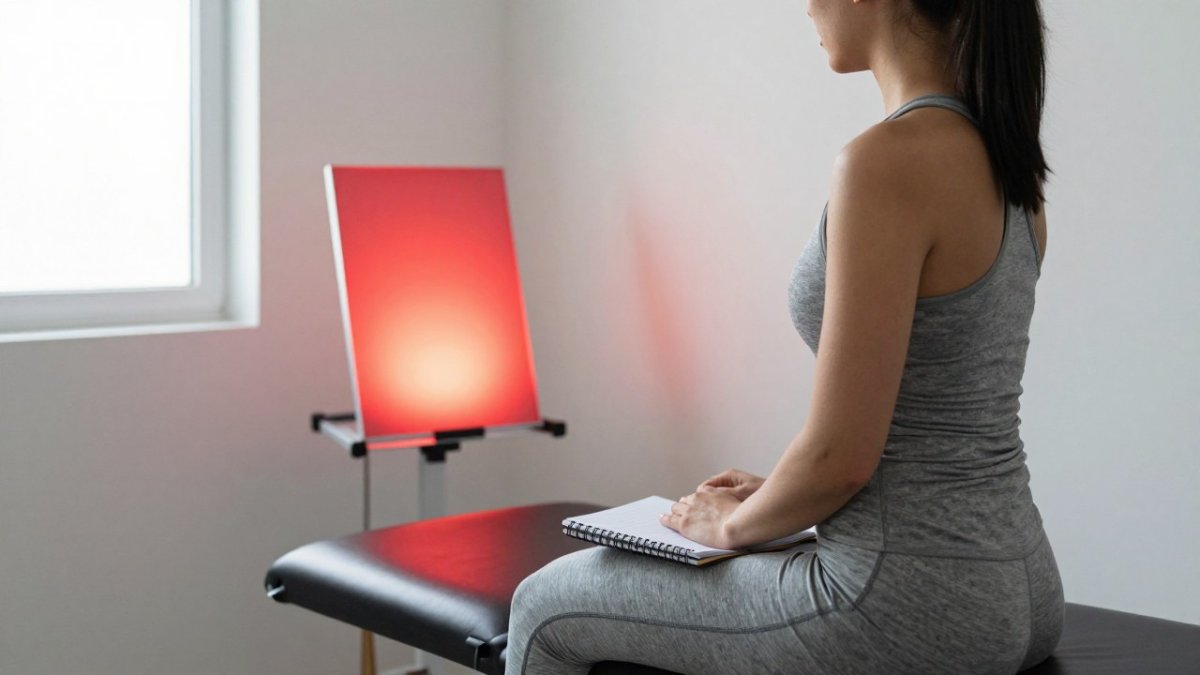
At The Powerful Body: Chiropractic & Massage, red light therapy is one of several recovery technologies offered alongside chiropractic and massage care.
The woman is American.
What one month typically delivers:
| Timeframe | What Most People Notice |
|---|---|
| Week 1-2 | Little visible change; skin may feel slightly warmer or softer |
| Week 3-4 | Early tone and texture shifts; reduced redness in some users |
| Week 5-8 | Firmer feel, smoother texture, more even complexion |
| Week 8-12 | Measurable elasticity and tone gains in clinical studies |
How Red Light Therapy Works and Why the First Month Matters
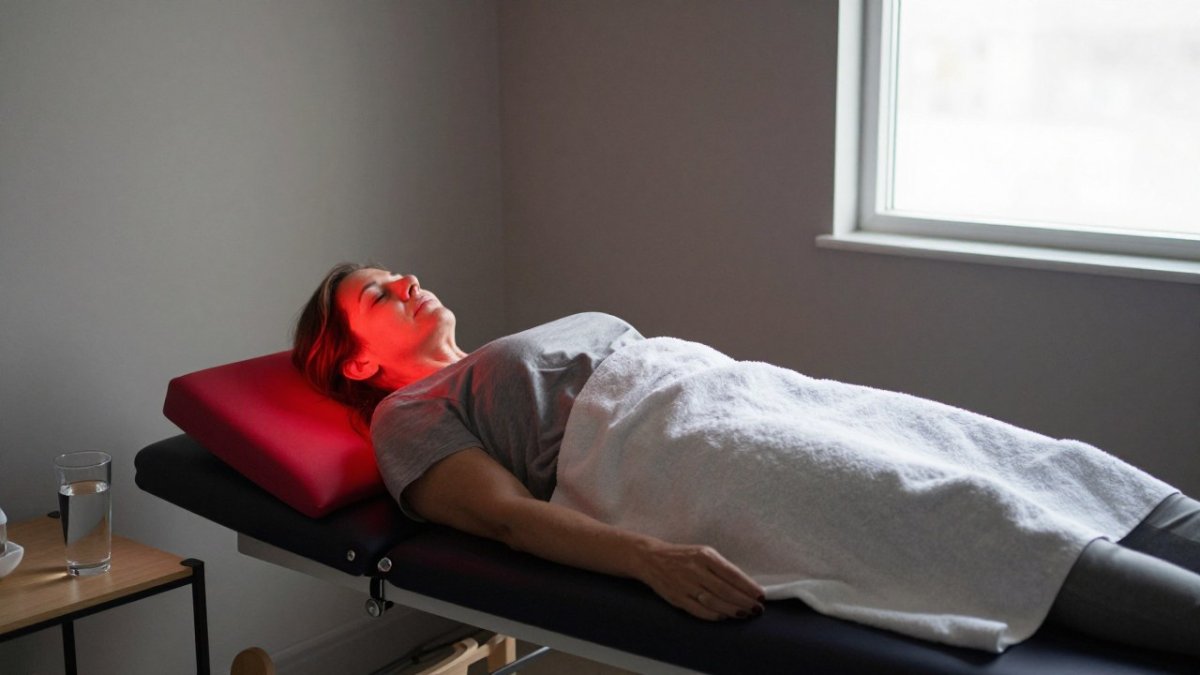
Red light therapy is a treatment that uses specific wavelengths of red and near-infrared light to stimulate cellular activity in the skin and deeper tissue. The light does not burn or cut. It triggers a cellular response that supports collagen production and tissue remodeling.
The first month matters because consistency drives the result. During weeks 1 through 4, you are building the treatment habit that the later gains depend on. Skip sessions and the timeline stretches.
A common mistake is judging the therapy too early. Cellular changes build slowly, and skipping days resets the clock. If you are comparing devices for home use, this guide to choosing recovery technology covers what to look for.
Red Light Therapy Before and After: What Changes Are Realistic
Before-and-after photos sell hope. The honest answer sits between the marketing and the skepticism. One 2014 study found that subjects had significantly improved skin complexion, skin feeling, and reduced roughness after treatment (A. Wunsch study via NIH).
But Stanford Medicine's review of the evidence notes that studies do not always show consistent success, and University of Utah Health describes real-world results as subtle rather than dramatic. That gap between study outcomes and mirror outcomes is not a contradiction.
Why two before-and-after photos rarely match. A published image and your bathroom selfie differ in at least five ways that have nothing to do with the therapy:
- Wavelength. Most clinical skin work uses red light near 630 to 660 nanometers; near-infrared near 810 to 850 nanometers penetrates deeper. A device outside those windows is not delivering the same stimulus.
- Irradiance and dose. Power density (measured in milliwatts per square centimeter) and session length together set the dose. Two devices run for the same 10 minutes can deliver very different doses.
- Distance and coverage. Holding a panel farther away lowers the dose at the skin. A small device covers a small area, so a full-face comparison may be treating only part of the face.
- Camera and light. Different room light, time of day, phone camera, and angle change skin appearance more than four weeks of therapy typically does.
- Baseline. A 25-year-old and a 55-year-old start from different collagen levels and will not show the same absolute change.
That is why a credible before-and-after set is boring on purpose: same room, same light, same distance, same time of day, same camera, no makeup, neutral expression.
What actually changes in a month, and how to see it.
- Skin tone: often looks slightly more even. Rate it 1 to 5 against your own day-one photo, not against a stranger's.
- Skin texture: can feel smoother to the touch. Run the back of your finger across the same cheek area each week.
- Redness: may calm in some users. Count inflamed spots or red patches rather than eyeballing the whole face.
- Fine lines: soften, but rarely disappear. Pick two or three specific lines and photograph them close-up.
- Puffiness: reduced in some reports. Morning photos before you wash your face are the fairest comparison.
Label the evidence you are reading. Anecdotal reports, single small studies, and systematic reviews are not the same strength of evidence.
Take your own photos under the same light, at the same time of day, before you start. That beats any marketing image.
How Long to See Results from Red Light Therapy on Face
How long to see results from red light therapy on the face depends on frequency and device quality. Timelines and session frequency vary by device and individual, so follow the manufacturer's instructions and a qualified provider's guidance.
Your face responds faster than most body areas because the skin is thinner and the treatment area is small. That said, the same rule applies: consistency beats intensity.
Watch out: more sessions do not speed up results. Overuse can irritate skin, and it wastes time. Follow the device instructions and your provider's guidance.
Red Light Therapy Results After 1 Month for Wrinkles
Changes to wrinkles from red light therapy are often subtle, and results vary between individuals. The mechanism is collagen production, and collagen rebuilds slowly.
It helps to separate the two kinds of lines, because they respond on different clocks:
- Fine lines and crepey texture come largely from surface collagen and elastin loss. These are the changes most likely to show early softening, because the treatment is reaching the dermis where new collagen is laid down.
- Deep wrinkles and folds involve structural change in the dermis and underlying fat pads. Light does not replace volume, so a month of sessions will not flatten a deep nasolabial fold. Expect improvement in texture around the fold, not disappearance of the fold.
What the research actually supports. The elasticity gains in the NIH study appeared after two months, not four weeks. That is consistent with how collagen remodeling works: new collagen is deposited gradually, and visible firmness lags behind the cellular change. A single month is long enough to build the habit and see early texture shifts, not long enough to judge the endpoint.
The variables that decide whether your month counts. Two people can follow the same schedule and get different results because the device and the dose differ:
- Wavelength. Red light near 630 to 660 nanometers targets surface texture; near-infrared near 810 to 850 nanometers reaches deeper. A wrinkle-focused plan usually wants both.
- Dose. Irradiance multiplied by time sets the dose. A low-power device used briefly may not reach the threshold studied in clinical work.
- Distance and coverage. A panel held at the recommended distance covers more area at the intended dose than a handheld pressed to one cheek.
- Frequency. Three to five sessions per week is the common starting range. Skipping days stretches the timeline rather than compressing it.
Watch out: more sessions do not speed up results. Overuse can irritate skin, and it wastes time. Follow the device instructions and your provider's guidance.
Your day-30 decision point. At the end of month one, you have three reasonable paths, and the choice depends on what you actually observed:
- Continue unchanged if you see early texture or tone shifts and no irritation. Stay consistent and re-evaluate at week 8 to 12.
- Adjust the protocol if you have been inconsistent, are using a device whose wavelength or dose you cannot confirm, or have been treating for too short a time per session. Fix the variable before you conclude the therapy failed.
- Consult a clinician if you have irritation, worsening redness, a photosensitivity condition, or are taking medications that increase light sensitivity. Also consult if you have followed a credible protocol consistently for 8 to 12 weeks with no change at all, since that points to a device, dose, or diagnosis issue rather than patience.
It is generally more useful to evaluate skin changes over months rather than weeks, using photos and notes.
For chronic soft tissue issues alongside skin goals, it helps to see how red light fits among non-surgical treatments.
How Long to See Results from Red Light Therapy for Hair Growth
How long to see results from red light therapy for hair growth is longer than skin. Hair grows in cycles, so visible change typically takes several months, not one month. Early shedding reduction may appear sooner in some users, but new growth takes time.
One month into a hair protocol is early. Track shedding counts and take scalp photos monthly. Judge the treatment at the three-to-six-month mark, not at week four.
Tracking Progress: Objective Ways to Measure Your First Month
Objective tracking beats guessing. Use the same tools each week so you compare like with like.
- Take photos in the same room, light, and angle
- Note skin texture on a 1-5 scale each week
- Record session dates and duration
- Track redness or irritation
- Log sleep and stress, since both affect skin
- Measure hair shedding counts if hair is the goal
Pair your protocol with recovery strategies that speed healing. Light supports tissue; sleep, movement, and nutrition support it too.
Building Your 30-Day Protocol with Professional Support
A 30-day protocol works best with a plan and a second set of eyes. Start with three to five sessions per week, keep each session short, and log every one. At day 30, review your photos and notes with a provider before you adjust anything.
At The Powerful Body: Chiropractic & Massage, Dr. Manny Trevino, who has over 30 years of clinical and military medicine experience, leads the practice. The integrated approach combines chiropractic care, massage therapy, and recovery technologies including shockwave, red light, PEMF, and fascia therapy. The practice offers personalized treatment plans designed to restore mobility, improve function, and support recovery.
If you want a guided start, book a professional pain relief consultation and we will map your first month together.
One month of red light therapy is a starting point, not a verdict. The people who see the best results are the ones who track honestly and stay consistent past week four.
Frequently Asked Questions
What results can you realistically expect after one month of red light therapy?
Most people notice subtle changes in skin tone, texture, and firmness within the first month, but dramatic transformations are uncommon. Results vary, and most changes are gradual. Expect early signs rather than a finished result.
How can you tell if red light therapy is working?
Objective tracking beats guesswork. Take before-and-after photos in the same lighting at the same time of day, note changes in skin texture and firmness, and log each session's duration and device distance. If you see no change in skin feel or appearance after several weeks, review your treatment frequency and device specifications with a qualified provider before increasing intensity.
Is 20 minutes of red light therapy enough per session?
Session duration depends on the device's irradiance and your treatment area, not a universal clock. Session duration and frequency depend on the device and your treatment area, so follow the manufacturer's instructions and a clinician's guidance. Follow your device's instructions and a clinician's guidance rather than extending sessions arbitrarily.
How long does it take to see red light therapy results for wrinkles?
Fine lines and wrinkles respond more slowly than skin tone or texture. Visible wrinkle changes from red light therapy are often gradual, and results vary between individuals. Set realistic expectations and track changes with photos.