 Ultimate guide
Benefits of Shockwave Therapy for Injuries
Table of Contents
- How Shockwave Therapy Works for Injury Recovery
- Key Benefits of Shockwave Therapy for Injuries
- Shockwave Therapy for Tendonitis and Chronic Conditions
- How Many Shockwave Therapy Sessions Are Needed?
- Is Shockwave Therapy Painful? What to Expect
- Shockwave Therapy vs. Other Treatment Options
- Home Devices vs. Clinical-Grade Shockwave Therapy
- Conclusion: Is Shockwave Therapy Right for Your Injury?
- Frequently Asked Questions
Last Updated: September 23, 2026
How Shockwave Therapy Works for Injury Recovery
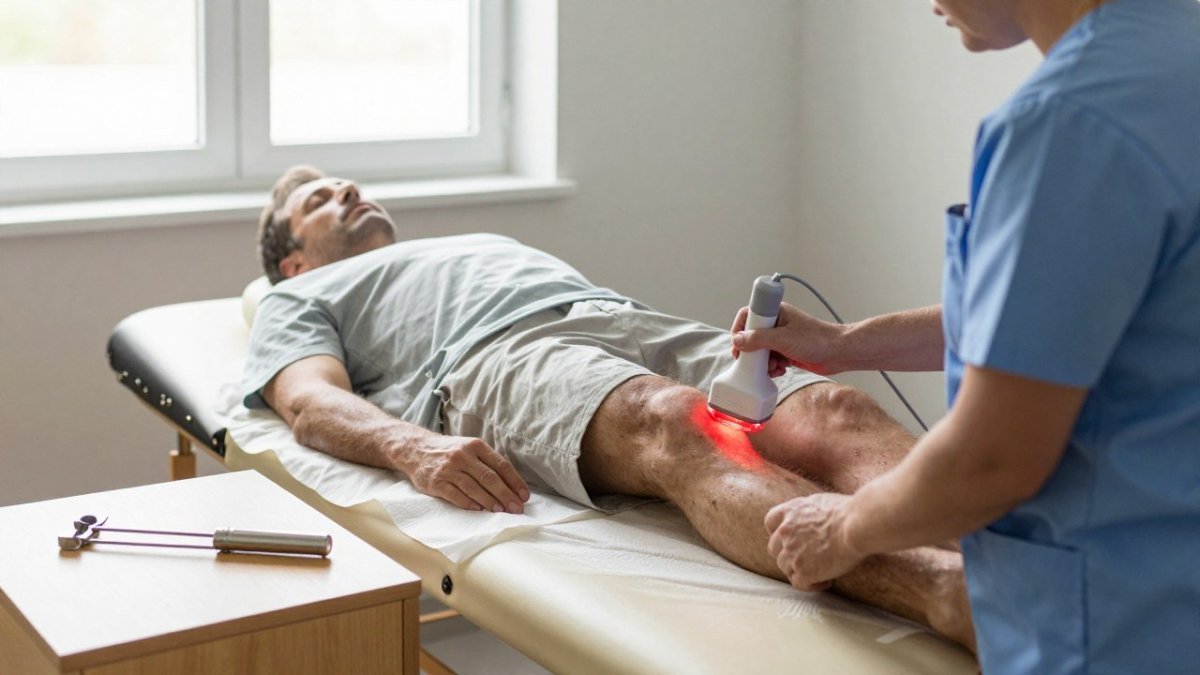
Shockwave therapy is a non-invasive treatment that delivers targeted acoustic waves into injured soft tissue to stimulate the body's own repair response. At The Powerful Body: Chiropractic & Massage, we use it as part of an integrated plan built around your specific injury. The benefits of shockwave therapy for injuries come down to one idea: you are not masking pain, you are prompting tissue to heal.
What Happens During a Session
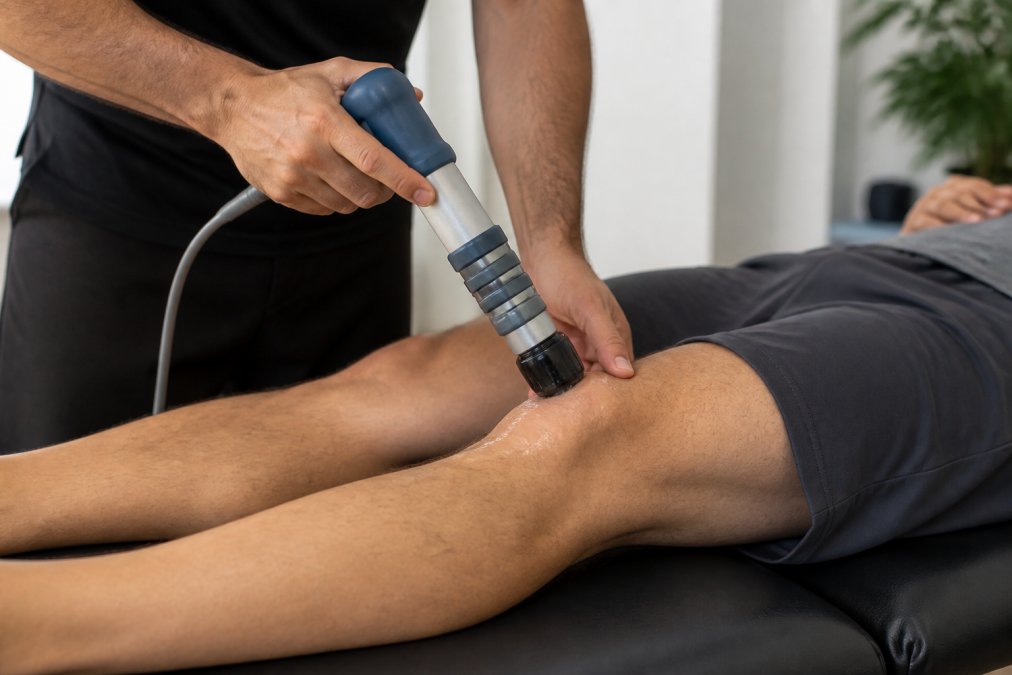
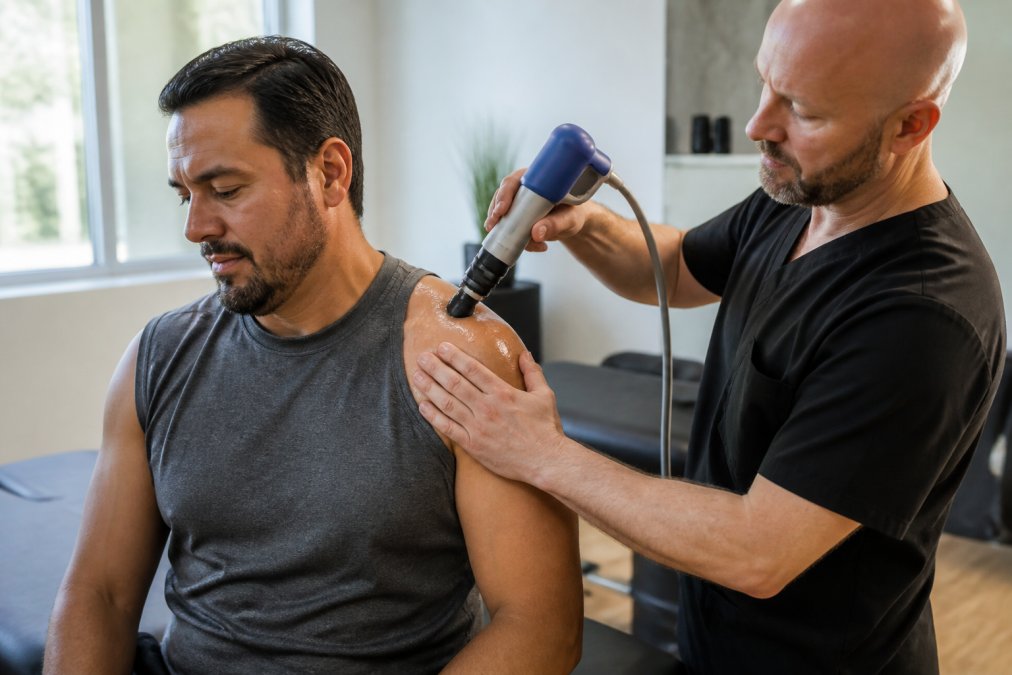
A clinician applies a handheld device to the treatment area with a small amount of gel. The device emits pulses of acoustic energy into the tendon, muscle, or attachment point. Sessions typically run a few minutes per area, and you stay clothed around the site.
Why Acoustic Waves Trigger Healing
The mechanical pressure of the waves creates controlled microtrauma at the injured site. In response, the body increases blood circulation and metabolic activity in the area, supporting tissue regeneration and collagen production. This is the mechanism behind much of the clinical interest in extracorporeal shockwave therapy, or ESWT, for musculoskeletal conditions.
Key Benefits of Shockwave Therapy for Injuries
The main benefits fall into two groups: pain relief and functional recovery, and tissue-level repair. Both matter, and they tend to arrive on different timelines.
Pain Relief and Functional Recovery
Many patients report reduced pain and easier movement in the weeks after starting treatment. Functional recovery is the goal, not just a lower pain score. If you can reach overhead or climb stairs without bracing, the treatment is doing its job.
Tissue Regeneration and Collagen Production
Shockwave therapy is thought to encourage collagen production and neovascularization, the growth of new blood vessels, in chronically injured tissue. That matters for tendon repair and ligament healing, where poor blood supply often slows recovery. Soft tissue injuries that have stalled for months are often the ones that respond most noticeably.
Shockwave Therapy for Tendonitis and Chronic Conditions
Shockwave therapy for tendonitis is one of its most common applications. Tendinopathy, including Achilles tendinopathy and calcific tendinitis of the shoulder, involves degenerated tissue that heals slowly because blood flow is limited. Targeted sound waves aim to restart that process.
How Many Shockwave Therapy Sessions Are Needed?
Most protocols call for a series of sessions rather than a single visit. A common pattern in clinical practice is three to six sessions spaced roughly five to ten days apart, with the total number depending on the condition, how long it has been present, and how you respond. A tendon problem that has persisted for a year rarely resolves in one appointment, and a newer overuse injury often needs fewer visits than a chronic one.
| Stage | Typical Focus | What to Expect |
|---|---|---|
| First sessions | Target the injured site | Some soreness, gradual easing |
| Middle sessions | Build on early response | Improved motion, less pain |
| Later sessions | Load and strengthen | Return toward normal activity |
What to Do After a Session (Post-Treatment Protocol)
Most articles stop at the procedure. What you do in the 48 hours after each session often determines how much of the benefit you keep. A practical post-treatment protocol looks like this:
- First 24 to 48 hours: Relative rest of the treated area. Avoid heavy loading, deep stretching, or aggressive massage directly over the site. Mild soreness, redness, or a warm feeling is expected and typically fades within a day or two.
- Days 2 to 5: Begin gentle range-of-motion work and light isometric contractions. This is where the tissue is most receptive to controlled loading, and it is the step most patients skip.
- Days 5 to 10 (before the next session): Progressive loading, eccentric exercises for tendons, graded strengthening for muscles, guided by your clinician. Shockwave creates the stimulus; loading is what converts it into durable tissue change.
- Throughout: Stay hydrated, keep sleep consistent, and avoid anti-inflammatory medication right around sessions unless your clinician directs otherwise, since the treatment relies on a controlled inflammatory response.
Cost and Insurance Reality
Cost transparency is one of the biggest gaps in most articles on this topic, so here it is plainly: shockwave therapy for musculoskeletal injuries is frequently considered investigational or experimental by many commercial health plans, which means it is often not covered and is paid out of pocket. Medicare generally does not cover it for most musculoskeletal conditions, and coverage for plantar fasciitis has historically been restricted.
Home Devices vs. Clinical-Grade Units
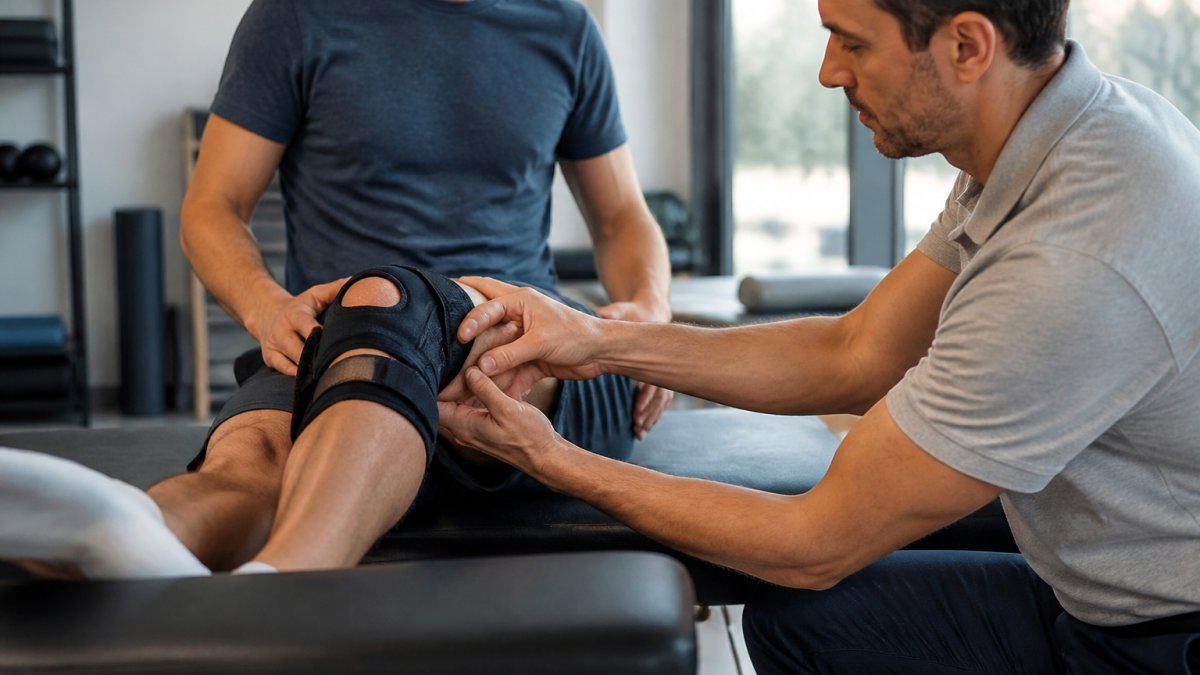
Consumer-grade shockwave devices sold for home use typically deliver far less energy per pulse than clinical-grade units, and results vary widely. A clinical setting also brings something a device cannot: assessment, dosing decisions, and a rehabilitation plan built around the treatment. For some people, a home unit supports maintenance between visits. For a genuine tendon injury, it is unlikely to replace professional care, and using one on an undiagnosed pain source can delay finding the actual cause.
Is Shockwave Therapy Painful? What to Expect
Is shockwave therapy painful? Most people describe it as uncomfortable rather than unbearable, a deep pressure or tingling that eases as the session continues. Discomfort during treatment is common and often fades within a day or two.
Shockwave Therapy vs. Other Treatment Options
Shockwave therapy is not the only option, and it is not always the right first one. The honest answer is that the best choice depends on your diagnosis, your goals, and what you have already tried. What most articles skip is the actual head-to-head comparison. Here is how shockwave stacks up against the modalities you are most likely to be offered.
Shockwave vs. Physical Therapy
Physical therapy and shockwave are not competitors, they are complements. Physical therapy addresses movement patterns, strength, and load tolerance. Shockwave addresses the tissue itself when it has stalled. For an acute injury, physical therapy alone is usually the right first step. For a tendon that has not responded to eight to twelve weeks of good physical therapy, adding shockwave is a reasonable escalation.
Shockwave vs. Corticosteroid Injections
Corticosteroid injections reduce inflammation and can relieve pain quickly, often within days. The trade-off is that they do not repair tissue, and repeated injections into a tendon are associated with weakening of the tendon over time. Shockwave works more slowly, typically over weeks, but aims at tissue regeneration rather than suppression. A common clinical sequence is to use an injection to break a severe pain cycle, then use shockwave and loading to rebuild.
Shockwave vs. Therapeutic Ultrasound
Ultrasound delivers low-energy sound waves primarily for heating and mild tissue effects. Shockwave delivers much higher energy per pulse, focused at depth, which is why it is used for chronic tendon and fascial conditions rather than for superficial muscle relaxation. If your provider is offering ultrasound for a year-old Achilles tendon, that is a different treatment with a different evidence base.
Shockwave vs. Surgery
Surgery is the most definitive option and the most disruptive. Shockwave is non-invasive, requires no anesthesia, and typically involves no downtime beyond post-session soreness. The trade-off is that it is not guaranteed, and it works best on specific tissue problems rather than on structural tears that need repair. For a full-thickness rotator cuff tear, shockwave is not a substitute for surgical evaluation.
A Simple Decision Framework
- Injury happened in the last two weeks: Rest, assessment, and physical therapy first. Shockwave is premature.
- Symptoms for six to twelve weeks despite good physical therapy: Shockwave is worth discussing, often alongside continued loading.
- Chronic for months to years, failed injections and therapy: Shockwave is one of the better remaining non-surgical options.
- Structural tear, instability, or neurological symptoms: Get a proper diagnostic workup before any modality, including shockwave.
Home Devices vs. Clinical-Grade Shockwave Therapy
Home devices sold for personal use typically deliver far less energy than clinical-grade units, and results vary widely. A clinical setting also brings something a device cannot: assessment, dosing decisions, and a rehabilitation plan around the treatment.
Conclusion: Is Shockwave Therapy Right for Your Injury?
The benefits of shockwave therapy for injuries are real but conditional: it tends to help most with chronic tendon and soft tissue problems that have not responded to rest or basic care. It works best as part of a plan, not as a standalone fix.
Frequently Asked Questions
Is there any downside to shockwave therapy?
Shockwave therapy is generally well-tolerated, but it can cause temporary soreness, redness, or mild swelling at the treatment site. Serious complications are rare when performed by a qualified provider. Some people may experience a brief increase in pain before improvement. It is not recommended for certain conditions such as bleeding disorders, active infections, or pregnancy. Always discuss your health history with your provider to ensure it is safe for you.
Can shockwave therapy heal a torn tendon?
Shockwave therapy can support tendon healing by stimulating collagen production and improving blood circulation, but it is not a guaranteed cure for a full tear. For partial tears or tendinopathy, it may reduce pain and improve function when combined with a rehabilitation plan. Complete ruptures often require other interventions. A proper diagnosis from a qualified professional is essential to determine if shockwave therapy is appropriate for your specific injury.
How often should shockwave therapy be done?
Most treatment plans involve one session per week for three to six weeks, but the exact frequency depends on your condition and response. Some people need fewer sessions, while chronic issues may require more. Your provider will tailor the schedule to your needs. It is important to follow the recommended plan and allow time for tissue recovery between sessions to avoid overloading the area.
What types of injuries respond best to shockwave therapy?
Shockwave therapy is commonly used for chronic tendinopathies such as plantar fasciitis, Achilles tendinopathy, and tennis elbow, as well as calcific tendinitis of the shoulder. It may also help with trigger points and other soft tissue injuries that have not responded to conservative care. Acute fractures or open wounds are not suitable. A consultation can help determine if your injury is likely to benefit from this approach.