 Ultimate guide
Ligament Tear Recovery Timeline: A Complete Guide
Last Updated: November 1, 2026
Quick Summary
The recovery timeline for a ligament tear depends on its grade: grade 1 sprains typically settle within 1-6 weeks, grade 2 partial tears within 3-12 weeks, and grade 3 complete ruptures take 3-6 months to full function, with ACL reconstruction requiring 9-12 months to return to sport.
- Healing unfolds in three overlapping phases: inflammation, proliferation, and maturation.
- Grade 1 injuries are managed nonsurgically with early protected motion rather than full immobilization.
- Nonsurgical treatment works for most grade 1 and grade 2 ligament tears and select partial ACL tears.
- Return to sport should be guided by functional benchmarks such as strength symmetry within roughly 90% of the uninjured side.
- Returning to full activity the moment pain fades is the most common cause of re-injury.
Table of Contents
- Ligament Tear Recovery Stages: From Injury to Full Function
- Recovery Timeline by Severity: What to Expect
- Ligament Tear Grade 1 vs Grade 3 Recovery
- Nonsurgical vs Surgical Treatment Paths
- How to Speed Up Ligament Healing
- Shockwave Therapy for Soft Tissue Injuries
- Return-to-Sport Criteria and the Psychological Side of Recovery
- Building a Recovery Plan with The Powerful Body
- Frequently Asked Questions
Ligament Tear Recovery Stages: From Injury to Full Function
The recovery timeline for ligament tears depends on grade, treatment path, and how consistently you follow rehabilitation.
A ligament tear is a partial or complete disruption of the fibrous connective tissue that binds bone to bone and stabilizes a joint.
The Inflammation Phase
The first 24 to 72 hours bring swelling, bruising, and pain as blood flow floods the injured tissue. This phase is protective, not a problem to eliminate. Excessive immobilization here can cost you range of motion later, so early protected movement matters.
The Proliferation Phase
New collagen fibers begin bridging the gap, typically over the first one to three weeks. Tissue is fragile and disorganized. Loading it too aggressively causes re-injury; loading it too little produces weak scar tissue.
The Maturation Phase
Collagen remodeling can continue for months. The Journal of Prolotherapy's discussion of incomplete ligament healing notes that joint laxity improvements may unfold across six weeks to a full year, which is why "feeling fine" and "being healed" are not the same milestone.
Recovery Timeline by Severity: What to Expect
The recovery timeline for ligament tears scales sharply with grade, and the grade is the single strongest predictor of how long you will be sidelined. A grade 1 sprain is a stretched ligament with micro-tears but no laxity. A grade 2 sprain is a partial tear with measurable joint laxity. A grade 3 sprain is a complete rupture, and the joint may no longer provide a firm end point on examination.
| Grade | Damage | Typical Timeline | Usual Path | Key Milestone |
|---|---|---|---|---|
| Grade 1 | Mild stretch, micro-tears, no laxity | 1-6 weeks | Nonsurgical, early protected motion | Pain-free full range of motion and no swelling by week 2-3 |
| Grade 2 | Partial tear, measurable laxity | 3-12 weeks | Nonsurgical, structured rehab | Symmetrical strength and stable joint on manual testing by week 8-12 |
| Grade 3 | Complete rupture | 3-6 months to full function | Often surgical, extended rehab | Functional stability and sport-specific testing before clearance |
| ACL reconstruction | Surgical repair of a complete tear | 9-12 months to sport | Surgery plus staged rehab | Strength symmetry and passing return-to-sport testing |
Grade 1: The One-to-Six-Week Window
Most grade 1 sprains settle within one to six weeks. The first 48 to 72 hours are the inflammation phase, when swelling and bruising peak. Protected movement, not full immobilization, is the priority. By the end of week one, most people can walk with a normal gait and have minimal pain at rest. By weeks two to three, range of motion should be near symmetrical with the uninjured side. The trap is assuming the injury is gone because pain is gone; collagen is still disorganized, and a premature return to cutting or pivoting can convert a grade 1 into a grade 2.
Grade 2: The Three-to-Twelve-Week Range
A partial tear takes longer because the gap must be bridged with new collagen before load can be progressed. Weeks one to three are about controlling swelling and restoring range of motion. Weeks three to six introduce progressive strengthening, often starting with isometrics and moving to controlled isotonic work. Weeks six to twelve focus on single-leg stability, proprioception, and sport-specific movement.
Grade 3: The Three-to-Six-Month Reality
A complete rupture changes the conversation. Nonsurgical management is possible for select partial or complete tears in low-demand patients, but functional instability, a high-demand knee, or a plateau in conservative care usually pushes toward surgery. When surgery is chosen, the timeline extends well beyond the tissue-healing window because the reconstructed ligament must be protected while it revascularizes and remodels. That is why ACL reconstruction carries a nine-to-twelve-month return-to-sport timeline even though the graft itself is biologically incorporated much earlier.
What Shortens or Lengthens the Timeline
Age matters: collagen turnover slows with age, and older athletes often need the upper end of each range. Smoking can constrict blood flow, and conditions affecting circulation may slow soft-tissue healing. Rehab consistency is the variable patients control most directly; those who complete their home program and progress loading in measured increments tend to land at the shorter end of their grade's range.
Ligament Tear Grade 1 vs Grade 3 Recovery
The gap between a grade 1 sprain and a grade 3 rupture is not just time. It is a different treatment philosophy. Grade 1 injuries are generally managed with relative rest and progressive range of motion.
Grade 3 injuries change the equation. Surgical reconstruction is generally the standard option for complete ACL tears in high-demand activities, and athletes in cutting and contact sports typically face a longer recovery window before returning.
Nonsurgical vs Surgical Treatment Paths
Nonsurgical treatment works for most grade 1 and grade 2 ligament tears, and for select partial ACL tears. London Knee Care (2026) estimates partial ACL tears may take three to six months to recover without surgery. A documented case from PMC's case study on conservative ACL rehabilitation describes successful management using a 90-degree range-of-motion protocol over a six-week period without acute surgical intervention.
Surgery becomes the conversation when the joint is functionally unstable, when a complete rupture affects a high-demand knee, or when conservative care plateaus. Either way, rehabilitation is not optional.
How to Speed Up Ligament Healing
You cannot compress the biology, but you can remove the obstacles. Recovery tends to go more smoothly when people consistently:
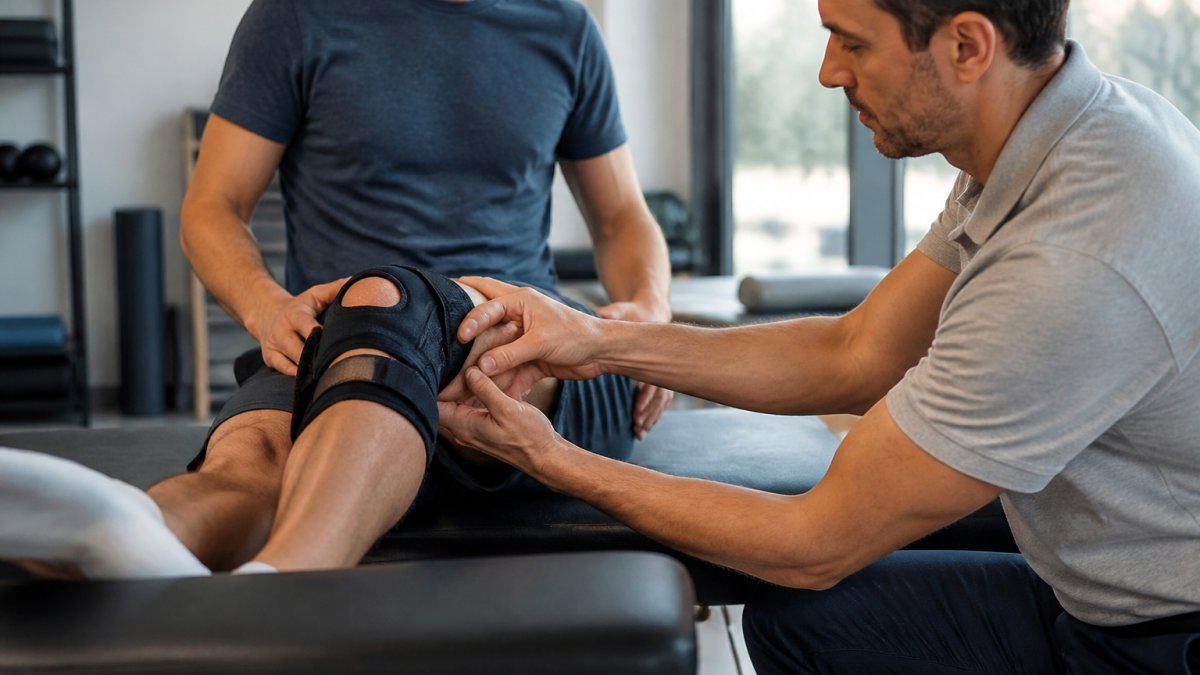
- Protect the joint early without full immobilization
- Consider adequate protein and vitamin C intake, which support collagen synthesis; ask a clinician or dietitian about your needs
- Progress loading in small, measurable increments
- Sleep seven to nine hours, since tissue repair is largely a nighttime process
Watch out: returning to full activity the moment pain fades is the single most common cause of re-injury, because pain resolves before structural integrity returns. If you are managing stiffness alongside a ligament injury, our guide on how to fix chronic neck stiffness covers self-guided mobility work you can apply at home.
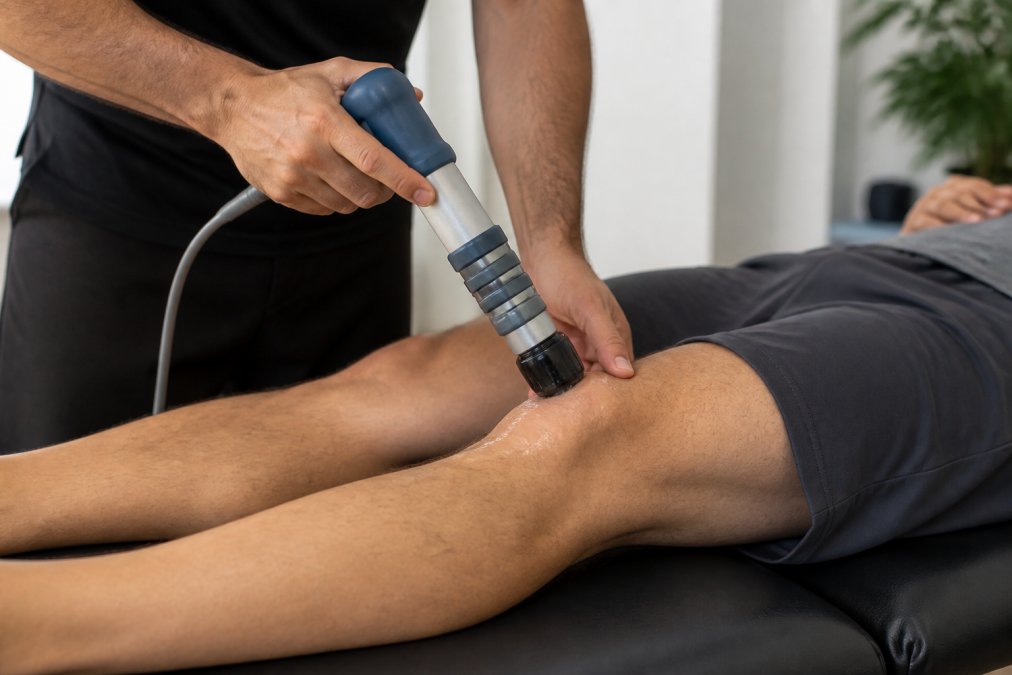
Shockwave Therapy for Soft Tissue Injuries
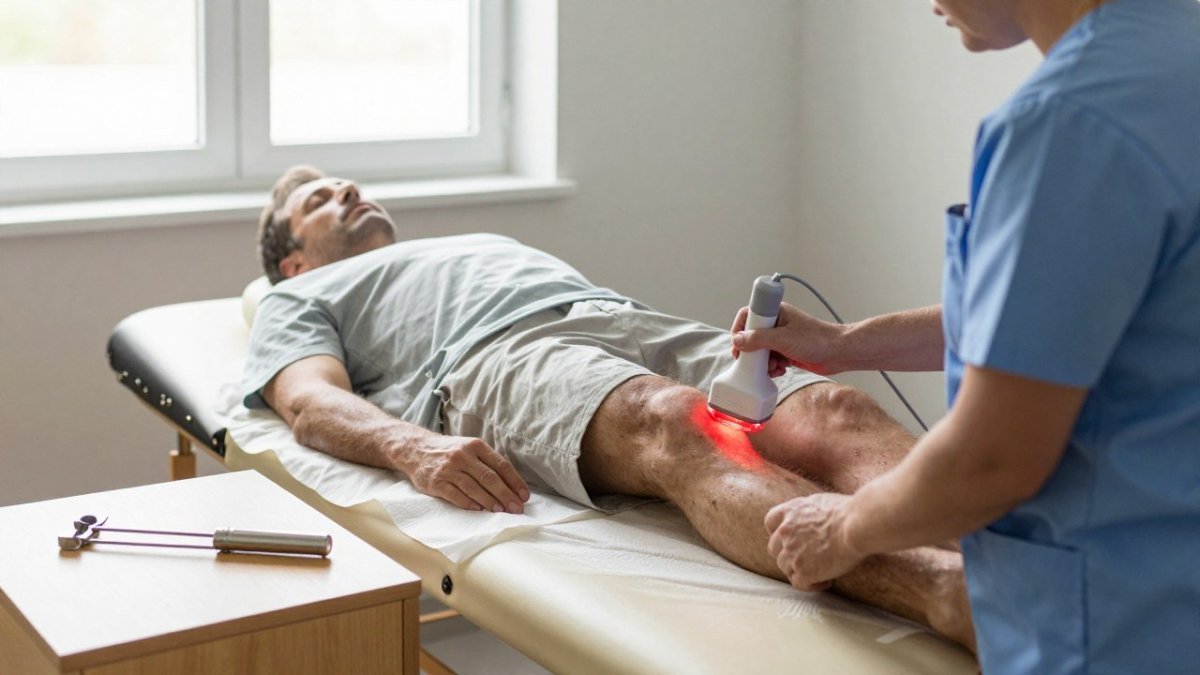
Shockwave therapy is one of several recovery technologies that may be considered alongside rehabilitation. For acute ligament tears, the priority remains protected loading and graded rehab, and a clinician can advise whether shockwave is appropriate for a given case.
Return-to-Sport Criteria and the Psychological Side of Recovery
Return to sport is best guided by function rather than pain alone. Return to sport is a functional decision, not a calendar decision, and the psychological side of a long recovery is as real as the tissue damage. This section covers both, because the two are intertwined: fear of re-injury measurably slows return to play, and athletes who are not psychologically ready tend to underperform or re-injure even when their tissue has healed.
Functional Benchmarks, Not Just Dates
Clinicians who clear athletes well use objective criteria rather than time alone. A common set of benchmarks includes:
- Strength symmetry: the injured side should be within roughly 90% of the uninjured side on validated strength testing before return to running or cutting.
- Pain-free functional testing: hopping, single-leg squats, and change-of-direction drills should be pain-free and symmetrical.
- Sport-specific movement quality: the athlete should demonstrate the deceleration, landing, and cutting mechanics their sport demands, not just straight-line speed.
A practical progression looks like this: walk without a limp, then jog, then run, then sprint, then cut, then compete. Each step should be pain-free and symmetrical before the next is added. Skipping steps is the most common path to re-injury.
Home-Based vs. Clinic-Based Recovery
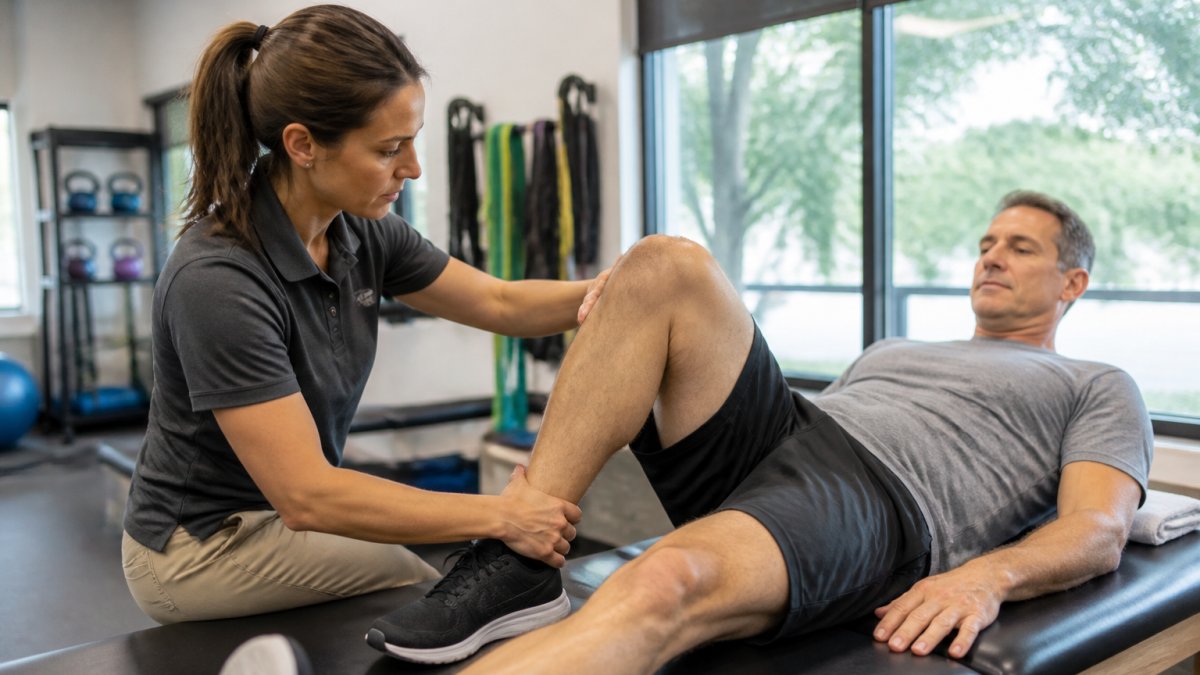
Not every exercise needs a clinic, and not every exercise is safe at home. Early range-of-motion work, isometric strengthening, and stationary cycling are generally safe to do at home once a clinician has cleared them. Balance and proprioception drills can be progressed at home with a wobble board or single-leg stands. What typically requires supervision: heavy loading progressions, plyometrics, sport-specific cutting and landing drills, and any exercise where a form error could re-injure the tissue.
The Psychological Side of a Long Recovery
Long recoveries breed fear of re-injury, and that fear is not a character flaw; it is a predictable response to a threat that has already happened once. Athletes who return to sport with high fear of re-injury are more likely to hesitate, guard the joint, and re-injure. The fix is not to "toughen up" but to build evidence of readiness: visible weekly milestones, tracked range-of-motion and strength numbers, and graded exposure to the movements that scare you.
A few tactics that help:
- Set weekly process goals (e.g., "complete three rehab sessions" or "add five degrees of knee flexion") rather than outcome goals you cannot control.
- Track numbers, not feelings. Range of motion, strength symmetry, and pain-free activity minutes give you objective evidence that progress is happening even when it does not feel like it.
- Normalize setbacks. Most recoveries have a bad week. Treating a flare-up as data rather than failure keeps motivation intact through month three, when enthusiasm typically collapses.
Building a Recovery Plan with The Powerful Body
A recovery plan should match the grade, the tissue, and the person. At The Powerful Body: Chiropractic & Massage, Dr.
Ligament healing is slow, and it generally goes best when the timeline is respected. If you are unsure how much loading is appropriate, a consultation with a qualified professional can help you plan around your grade, goals, and daily demands.
Frequently Asked Questions
How many days should I rest for a ligament tear?
Rest length depends on the grade. A grade 1 sprain typically heals within 1 to 6 weeks, and you can usually begin gentle movement after a few days of relative rest. A grade 2 partial tear generally needs 3 to 12 weeks, with a longer period of protected motion. A grade 3 complete tear often takes 3 to 6 months to reach full function. Prolonged immobilization can weaken surrounding tissue, so ask a clinician when to start controlled movement.
Does a ligament tear ever fully heal?
Many ligament tears recover enough for full daily function, but the tissue does not always return to its original structural integrity. Clinical literature notes that ligament healing is often slow and can be incomplete, which may leave some joint laxity. Grade 1 sprains usually resolve well. Higher-grade tears and ACL ruptures carry a greater chance of chronic instability. Structured rehabilitation, including range-of-motion work and strengthening, improves functional recovery and joint stability.
Is walking good for torn ligaments?
Walking can help during later recovery stages, but timing matters. In the first days after injury, the priority is managing swelling and protecting the joint. Once inflammation settles, controlled weight-bearing often supports tissue repair and prevents stiffness. For a grade 3 tear or an ACL rupture, walking should follow a clinician's guidance. A physical therapy plan typically sets the pace, starting with protected movement and progressing to full weight-bearing as joint stability improves.
What are the three grades of ligament tears and how do they affect recovery?
Grade 1 is a mild sprain with micro-tearing and typically heals in 1 to 6 weeks. Grade 2 is a partial tear with more swelling and laxity, generally needing 3 to 12 weeks. Grade 3 is a complete rupture, often requiring 3 to 6 months for full function, and ACL reconstruction surgery recovery can take 9 to 12 months before return to sport. Grade matters because it sets the rehabilitation protocol, the immobilization period, and the return timeline.
What helps torn ligaments heal faster?
Several factors support faster healing. Early swelling control, a graded rehabilitation protocol, and consistent physical therapy all help. Nutrition matters too: protein and vitamin C support collagen synthesis during the remodeling phase. Avoiding smoking and managing load also protect tissue repair. Recovery milestones should be set by a clinician, since pushing too hard too soon can cause scar tissue formation and chronic instability.
When should I consider physical therapy for a ligament injury?
Start as soon as the acute phase settles, often within the first one to two weeks. Physical therapy guides the progression from the inflammation phase through proliferation and maturation. It restores range of motion, rebuilds strength, and retrains joint stability. For grade 2 and grade 3 injuries, or after surgical intervention, structured rehabilitation is essential. An orthopedic assessment can confirm your grade and set a recovery timeline that matches your sport or job demands.