 Ultimate guide
Why Do Athletes Need Sports Injury Rehab?
Last Updated: November 14, 2026
Quick Summary
Sports injury rehab is needed because it restores tissue, movement, and function so athletes can return to training without re-injuring the same structure. A 2017 review describes rehabilitation as important for full recovery, for minimizing time away from sport, and for preventing reinjury. Rest handles the first few days; sports injury rehab handles everything after.
- Skipping rehab creates a cycle of pain, rest, false recovery, and reinjury.
- The injured side can test 20-30% weaker and still feel fine during daily activity.
- Rehab phases are criteria-based, not calendar-based, progressing from protection to performance.
- Return-to-sport criteria include range of motion within 10% of the healthy side.
- Seek evaluation if swelling appears within the first hour after injury.
Table of Contents
- Why Sports Injury Rehab Is More Than Rest
- What Happens Without Proper Rehabilitation
- The Phases of Sports Injury Rehabilitation
- Benefits of Physical Therapy for Athletes
- Chiropractic Care for Sports Performance and Recovery
- Objective Return-to-Sport Criteria and Load Management
- Psychological Readiness and Fear of Reinjury
- When to Seek Professional Help for a Sports Injury
- Frequently Asked Questions
Why Sports Injury Rehab Is More Than Rest
Rehabilitation after a sports injury is the structured process of restoring tissue, movement, and function so an athlete can return to training without re-injuring the same structure. Skipping that process often leads to a familiar pattern: athletes who rest, feel better, return too soon, and end up back on the sideline.
The temptation to just wait it out is understandable. Pain fades, swelling drops, and the body feels normal again. But "feels normal" and "is ready" are different things.
A 2017 review of sports injury rehabilitation describes rehabilitation as important for full recovery, for minimizing time away from sport, and for preventing reinjury. That's the whole argument in one sentence. Rest handles the first few days. Rehab handles everything after.
Below, we'll walk through what actually happens without proper rehab, the phases of a rehabilitation plan, and how we build return-to-sport criteria that hold up under real training loads. If you're dealing with a related issue like chronic neck stiffness and want a concrete example of structured self-care, our guide on how to fix chronic neck stiffness walks through it step by step.
What Happens Without Proper Rehabilitation
Skipping rehab doesn't usually produce a dramatic collapse. It produces a quieter pattern: the injury "heals," the athlete returns, and the same tissue fails again a few weeks later.
Here's what goes wrong, in order:
- Scar tissue forms without direction. Healing tissue needs controlled load to organize properly. Without it, the tissue is weaker and less tolerant of stretch.
- Range of motion stays limited. A joint that doesn't get moved through its full range during recovery tends to stay guarded and stiff.
- Strength deficits hide. The injured side can test 20-30% weaker and still feel fine during daily activity. That gap only shows up at sprint speed or under a heavy barbell.
- Compensations become habits. Athletes limp, favor one side, or alter mechanics. Those patterns persist long after the pain is gone.
The result is a predictable cycle: pain, rest, false recovery, reinjury. Each round costs more time away from sport than the last.
The Phases of Sports Injury Rehabilitation
The phases of sports injury rehabilitation follow a progression from protection to performance, and each phase has specific goals before the next begins. Progression isn't calendar-based. It's criteria-based, and that distinction matters more than most athletes realize.
Phase 1: Calm the Injury
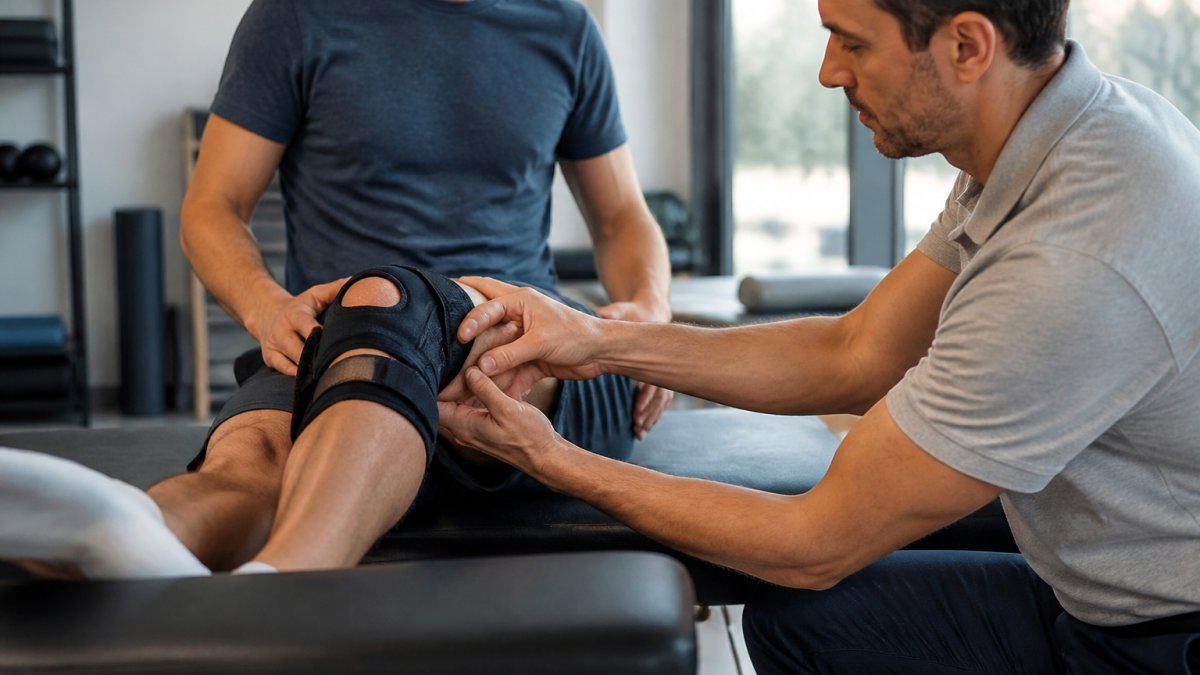
The first phase targets pain, swelling, and protection. The goals are simple: reduce inflammation, maintain what movement is safe, and prevent the injury from getting worse. Relative rest beats total rest here. Complete immobilization slows healing and costs range of motion you'll have to earn back later.
What this phase looks like depends on the tissue. For an ankle sprain, it may mean protected weight-bearing in a brace and gentle range-of-motion work within pain limits. For a hamstring strain, it may mean avoiding stretch while allowing isometric contractions. For a shoulder injury, it may mean sling use for a short period followed by pendulum exercises. The common thread is controlled loading, not stillness.
Watch out: prolonged immobilization beyond what the injury requires is a common mistake. Most practitioners find that tissue tolerates gentle loading earlier than athletes expect, and the range of motion lost to extended rest is harder to recover than the range protected by a few days of caution.
Phase 2: Restore Motion and Strength
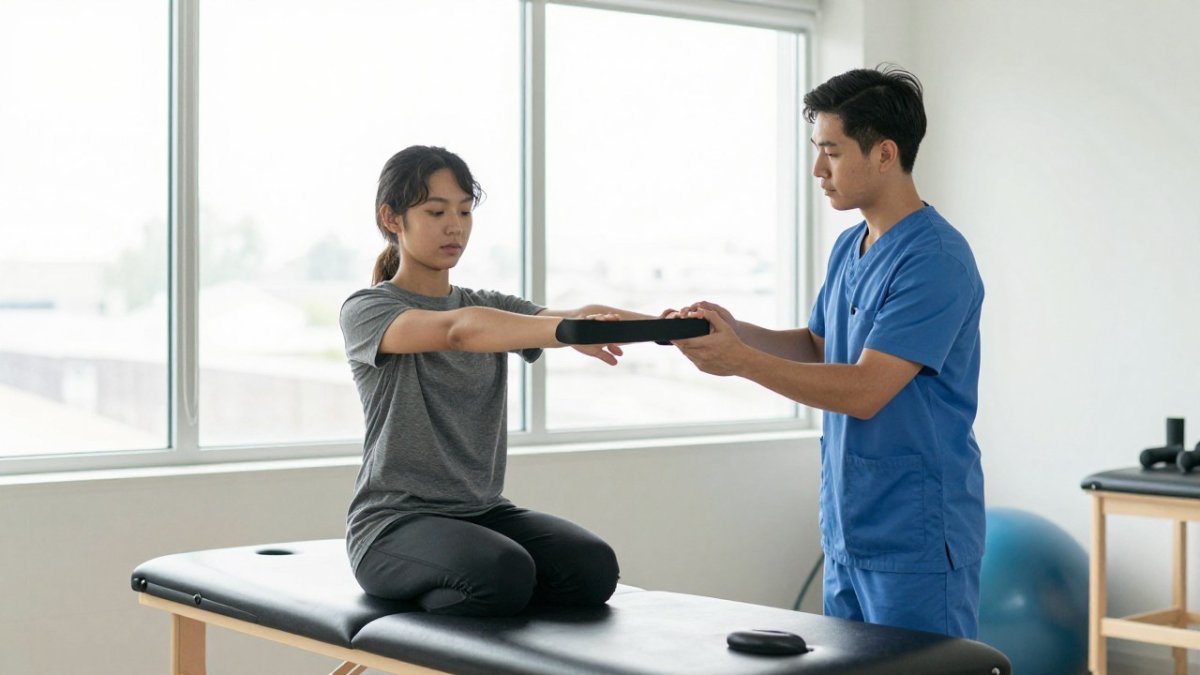
This is where most rehab plans earn or lose their value. The focus shifts to range of motion, then strength, then control. Exercise therapy drives the process, with manual therapy used to address restrictions that limit movement. Balance and coordination work starts here too, because proprioception degrades after injury and doesn't return on its own.
The sequence differs by injury. After an ACL reconstruction, range of motion and quadriceps activation come first, followed by closed-chain strengthening and eventually plyometrics. After a lateral ankle sprain, the priority is restoring dorsiflexion and peroneal strength before balance work. After a hamstring strain, eccentric strengthening becomes the centerpiece once pain allows. After a shoulder injury, scapular control and rotator cuff endurance often precede overhead loading.
A common pattern is that athletes rush strength work before range of motion is restored, then wonder why the joint feels tight under load. Range first, then strength, then power is the safer order for most tissues.
Phase 3: Return to Sport
The final phase rebuilds sport-specific capacity: sprinting, cutting, jumping, throwing, whatever the sport demands. Load management matters most here, with training volume typically climbing in planned steps.
This phase is where injury-specific pathways diverge most. A soccer player recovering from an ACL tear needs progressive cutting and deceleration drills before full training. A basketball player with an ankle sprain needs repeated hopping and landing control. A thrower with a shoulder injury needs a graded throwing program that builds volume before intensity. A sprinter with a hamstring strain needs progressive acceleration before top speed.
Benefits of Physical Therapy for Athletes
Physical therapy for athletes can address more than pain relief, including range of motion, strength, flexibility, and the balance and coordination that protect joints under load.
The evidence supports the broader picture. A 2024 review covering 50 years of sport injury psychology research identifies rehabilitation outcomes and return-to-sport processes among the central research topics, and it treats psychological factors as relevant to both. In practice, that means a good program addresses confidence alongside tissue.
Some providers combine chiropractic care, massage therapy, and recovery technologies into one coordinated plan, and the aim of such an approach is typically tissue healing and whole-body restoration rather than temporary symptom relief.
Chiropractic Care for Sports Performance and Recovery
Chiropractic care for sports performance is generally concerned with how well the body moves under load, not just whether it hurts.
A joint can sometimes be restricted without being painful, with compensations appearing before pain does.
Chiropractic care for athletes may pair joint work with soft tissue treatment, and athletes in the Dallas-Fort Worth area sometimes seek chiropractic care after a course of physical therapy that addressed strength but not the movement restriction behind the problem.
Objective Return-to-Sport Criteria and Load Management
Objective return-to-sport criteria are measurable benchmarks an athlete must clear before full training resumes, and they beat the "how does it feel?" test every time. Feeling ready and being ready diverge most sharply in the final weeks of recovery.
Return-to-sport decisions can draw on several categories of criteria:
| Criterion | What We Measure | Why It Matters |
|---|---|---|
| Range of motion | Injured side within 10% of the healthy side | Guards against altered mechanics |
| Strength | Symmetrical strength on tested movements | Hidden deficits fail under load |
| Functional movement | Jump, hop, and cut tests without pain or hesitation | Confirms control, not just power |
| Sport-specific load | Progressive return to sprint, cut, or throw volume | Catches intolerance before it becomes injury |
Load management generally runs alongside return-to-sport testing, with training volume increased in planned increments and the athlete's response tracked over the following days. A pain or swelling response typically signals that the last step was too big.
Psychological Readiness and Fear of Reinjury
Psychological readiness is the athlete's confidence to move at full speed without guarding the injured area, and it belongs in the return-to-sport decision. Research on sport-injury psychology treats fear of reinjury as a real factor in rehabilitation outcomes, not a character flaw.
Athletes sometimes clear every physical test yet hesitate on the first hard cut. That hesitation can change joint loading, and fear of reinjury can make reinjury more likely.
What helps: graded exposure to the feared movement, honest conversation about what the tissue can now tolerate, and clear criteria so the athlete knows exactly where they stand. Confidence built on evidence holds up better than confidence built on reassurance.
One general approach to building confidence is to pair each return-to-sport criterion with rehearsal of the relevant movement in a controlled setting, progressing toward more demanding environments.
Motivation matters too, but not in the way athletes expect. High motivation can push an athlete to skip steps, while low motivation can stall adherence. Both are worth naming openly. A clinician who asks about sleep, stress, and confidence alongside pain and swelling gets a fuller picture of readiness.
When fear of reinjury persists despite physical clearance, referral to a sports psychologist or another qualified professional may be appropriate.
When to Seek Professional Help for a Sports Injury
Seek professional evaluation for any injury that causes immediate swelling, visible deformity, inability to bear weight, or pain that persists beyond a few days. Those signs point to structures that need proper assessment, not home management.
Use this checklist to decide:
- Swelling appeared within the first hour after injury
- You cannot put full weight on the limb or move the joint through its normal range
- Pain has not improved after 3 to 5 days of relative rest
- The joint feels unstable or gives way
- Numbness, tingling, or weakness accompanies the injury
- You've had the same injury before and it never fully settled
If you checked any box, get assessed. A clinical assessment identifies what's actually injured and sets a rehabilitation plan with real benchmarks. For an athlete, the cost of a delayed diagnosis is measured in weeks on the sideline.
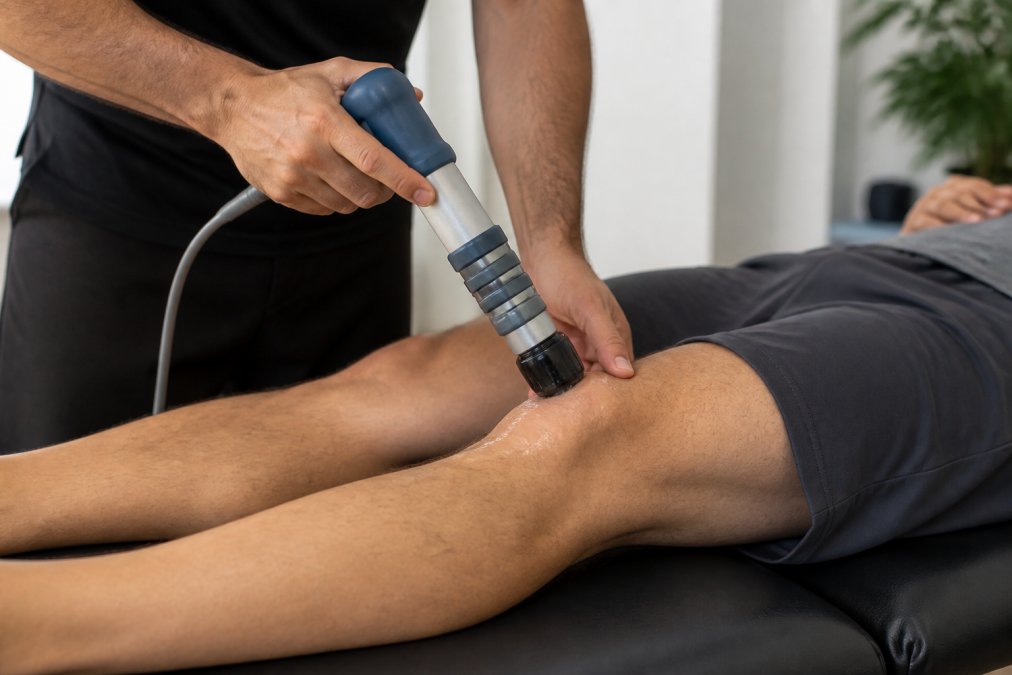
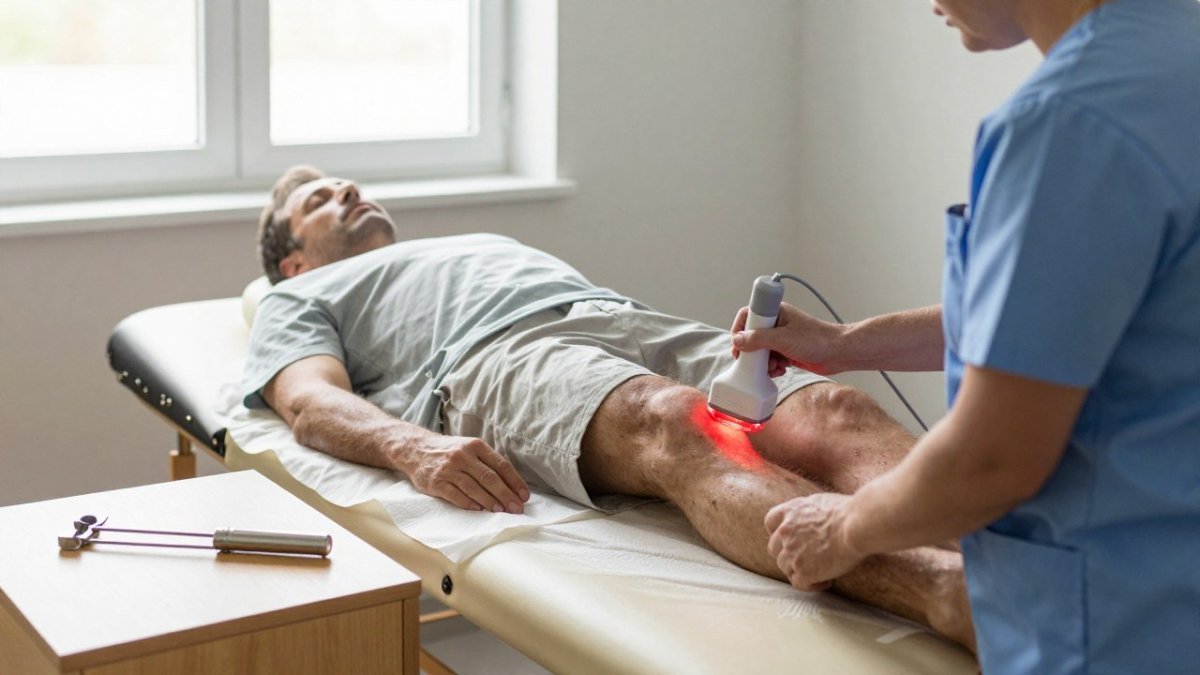
Sports injuries rarely respect a training calendar, and the gap between "it stopped hurting" and "it's ready" is where seasons get lost. At The Powerful Body: Chiropractic & Massage, Dr. Manny Trevino brings over 30 years of clinical and military medicine experience to personalized treatment plans that combine chiropractic care, massage therapy, and recovery technologies like shockwave and red light therapy. We build plans around your sport, your movement restrictions, and measurable return-to-sport criteria so you can get back to training with confidence rather than guesswork. Get started with The Powerful Body: Chiropractic & Massage and build a body that holds up to the load you put on it.
Frequently Asked Questions
Why is rehabilitation important for athletes?
Rehabilitation after a sports injury supports full recovery, shortens time away from sport, and lowers the chance of reinjury, according to a 2017 review in PubMed Central. It also addresses strength, mobility, and confidence, not just pain. Without a structured plan, athletes often return too soon and repeat the same injury. A sports injury rehab program should be individualized and progress through clear phases.
What are the phases of sports injury rehabilitation?
Most programs move through three broad phases: calming pain and swelling, restoring range of motion and strength, and returning to sport-specific training. The phases of sports injury rehabilitation are not strictly linear, and a physical therapist adjusts the pace based on clinical assessment. Load management and functional movement tests help decide when to advance. The goal is a safe return to play, not just the absence of pain.
What is the difference between physical therapy and chiropractic care for athletes?
Physical therapy focuses on exercise therapy, mobility, strength, and functional movement, while chiropractic care for sports performance often centers on joint motion, manual therapy, and posture. Both can be part of a rehabilitation plan. Some athletes use both to address different aspects of recovery. A sports medicine physician or physical therapist can help coordinate care so the plan stays consistent and safe.
How does sports injury rehab improve long-term athletic performance?
A complete rehab plan restores strength, flexibility, balance, and coordination, which are the foundations of performance. It also reduces the risk of reinjury, so athletes spend less time on the sideline. Research on the psychology of sport injury notes that confidence and psychological readiness affect return-to-sport outcomes. Addressing those factors alongside physical recovery supports a more durable return to competition.