 blog
The Best Recovery Tools for Marathon Runners
Last Updated: November 17, 2026
Quick Summary
The best recovery tools for marathon runners are a foam roller, massage gun, massage stick, compression garments, compression boots, and cold or heat therapy. Compression and cold therapy have the most supporting evidence, but tools work best as force multipliers for sleep, nutrition, and smart training load.
- Sleep, nutrition, and smart training load do more for recovery than any device you can buy.
- Roll slowly for 30 to 60 seconds per area and stop at discomfort, not pain.
- Most massage guns run 2 to 4 hours per charge, so check battery life and noise before buying.
- A foam roller, massage stick, and compression socks cover the fundamentals for under $150.
- In the 48 hours after the marathon, prioritize sleep, fluids, and easy walking.
Table of Contents
- What the Best Recovery Tools for Runners Actually Do
- The Foam Roller for Runners: Self-Myofascial Release
- The Massage Gun for Runners: Percussive Massage
- Massage Sticks, Compression Boots, and Cold or Heat Therapy
- Building a Marathon Recovery Kit by Training Phase
- Safety, Contraindications, and When to Seek Care
- Matching Recovery Tools to Your Budget and Needs
- Adding Professional Recovery Care to Your Routine
- Frequently Asked Questions
What the Best Recovery Tools for Runners Actually Do
A 2024 systematic review in research on recovery strategies for endurance athletes found that individual studies support compression garments and cryotherapy for training recovery, while noting that more research is needed. That single sentence captures the honest state of recovery tools: promising, widely used, and not magic. Many runners own several recovery gadgets and still feel beaten up after a long run.
Here is the core argument of this guide: recovery tools work best as force multipliers for the fundamentals, not replacements for them.
Tools Versus the Fundamentals
Sleep, nutrition, and smart training load do more for post-run recovery than any device you can buy. A Sportsmith analysis of recovery tools and techniques points out that athletes often overlook adequate sleep, optimal nutrition, and appropriate periodization, which are the proven fundamentals. Tools add comfort and circulation. They do not substitute for eight hours of sleep.
How to Read the Evidence
Treat bold claims with caution. When a product promises faster marathon recovery, ask what the study measured and in whom. Compression and cold therapy have the most supporting evidence, but even those findings come from individual studies rather than settled consensus.
The Foam Roller for Runners: Self-Myofascial Release
The foam roller is the cheapest, most reliable entry point into running recovery. Self-myofascial release means applying pressure to muscle tissue to reduce tightness and improve mobility.
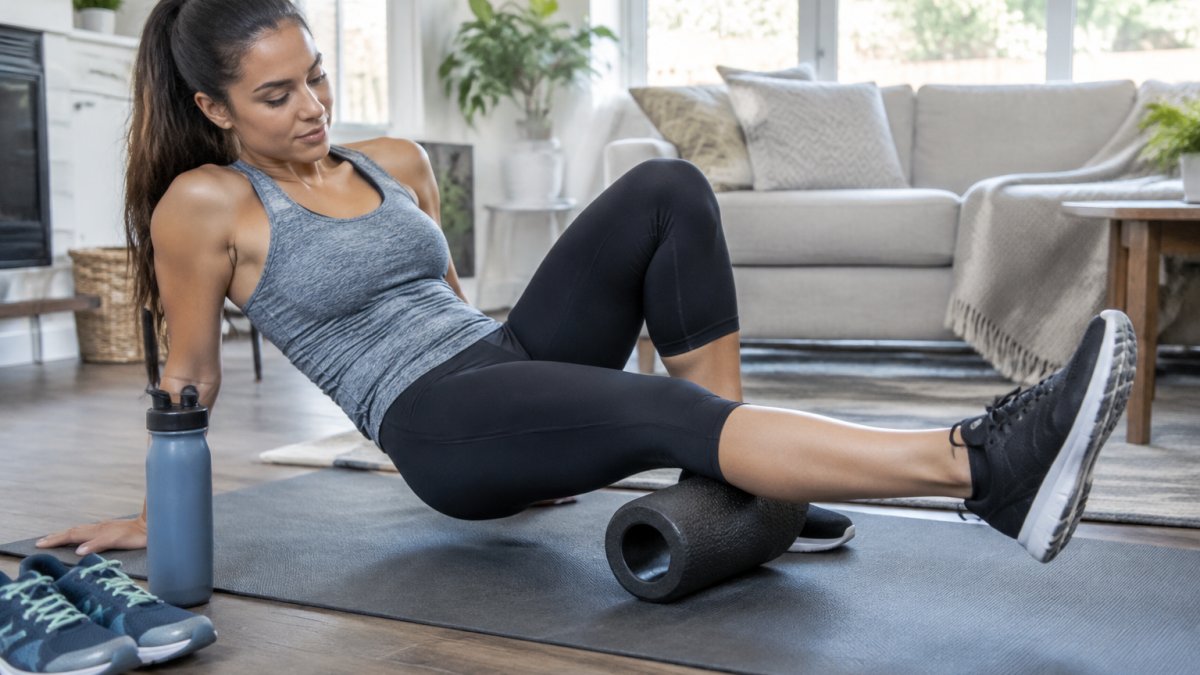
Best for: budget-conscious runners and daily maintenance. Skip if: you have an acute injury or bruising.
How to Use It Without Making Soreness Worse
Roll slowly, spend 30 to 60 seconds per area, and stop at discomfort, not pain. A common mistake is grinding hard into a sore spot for minutes. That aggravates tissue instead of releasing it. Roll calves, quads, and glutes after easy runs, not immediately after a hard race.
The Massage Gun for Runners: Percussive Massage
A massage gun delivers rapid, targeted pulses into muscle tissue, and it is the most portable option for post-run relief. Percussive massage is popular because it is simple: point, press, move. It reaches deep tissue in the calves and glutes where a foam roller struggles.
Best for: runners who travel or want quick pre-run activation. Skip if: you want quiet operation or unlimited runtime.
Battery Life, Noise, and Portability
Most devices run 2 to 4 hours per charge, and cheaper models buzz loudly enough to annoy a household. Check battery life and noise before you buy. A quiet gun with a swappable battery beats a loud one with more power settings you will never use.
Massage Sticks, Compression Boots, and Cold or Heat Therapy
This cluster of tools covers the widest range of price points and use cases in marathon recovery. Each works through a different mechanism, and each has a different place in a training week. Treating them as interchangeable is the fastest way to waste money.
Massage Sticks and Handheld Massage Tools
A massage stick is a rigid or semi-rigid rod with rolling segments that you drag along a muscle group.
Massage sticks are generally among the lightest tools in a recovery kit. They can fit in a gym bag and need no charging.
Best for: travel, race weekends, and runners who want a zero-charge tool. Skip if: you need deep pressure on large muscle groups.
Watch out: rolling aggressively over the shin bone or directly on the IT band can irritate tissue rather than relieve it. Stay on muscle bellies.
Compression Garments and Recovery Boots
Compression garments, such as socks, sleeves, and tights, apply graduated external pressure to the limb. A 2024 systematic review in research on recovery strategies for endurance athletes found that individual studies support compression garments for training recovery, though the authors noted more research is needed.
Compression boots take the same principle and automate it. You sit or lie down, slide your legs into inflatable sleeves, and the device cycles pressure from foot to thigh.
Best for: runners logging high weekly mileage and anyone who wants passive recovery. Skip if: you have circulation problems, nerve conditions, or bleeding disorders without talking to a clinician first.
Cold Therapy and Heat Therapy
Cold therapy, such as ice baths and cold packs, is best used after hard efforts to calm inflammation and reduce perceived soreness.
A marathon recovery guide from City Fitness on post-race recovery names compression boots, infrared sauna, and red-light therapy alongside cold options. Cupping and other muscle-treatment tools round out the category, though evidence for these is thinner.
Watch out: do not apply ice directly to skin for extended periods, and avoid cold therapy over areas with poor circulation.
How These Tools Fit Together
A practical marathon recovery kit does not need all four categories. A massage stick handles travel and pre-run activation. Compression socks cover post-long-run and travel days. Boots are the high-mileage luxury. Cold and heat are situational tools for hard efforts and stiff rest days. Build the kit around your training phase, not around what looks impressive in a closet.
Building a Marathon Recovery Kit by Training Phase
Build your kit around training load, not around what looks impressive in a closet. During base building, a foam roller and massage stick handle daily maintenance. In peak weeks, add a massage gun for deep tissue work. Compression boots earn their place once weekly mileage climbs.
| Phase | Primary Tool | Secondary Tool | Frequency |
|---|---|---|---|
| Base building | Foam roller | Massage stick | Daily, 10 min |
| Peak mileage | Massage gun | Compression boots | 3-4x weekly |
| Taper | Compression garments | Heat therapy | Daily |
| Race week | Massage stick | Cold therapy | As needed |
| 48 hours post-race | Compression boots | Cold therapy | 2-3 sessions |
Race Week and the 48 Hours After the Marathon
Keep race week gentle. Light self-massage and compression garments support circulation without adding soreness. In the 48 hours after the marathon, prioritize sleep, fluids, and easy walking. Compression boots and cold therapy can ease swelling, but skip deep tissue work until the worst soreness fades.
Safety, Contraindications, and When to Seek Care
Recovery tools are generally low-risk, but they are not for everyone. Avoid aggressive massage, cupping, or percussive work over acute injuries, open wounds, bruises, or areas of swelling.
Watch out: sharp, localized pain that worsens with pressure is a signal to stop, not push through. If pain persists beyond a few days, limits your walking, or comes with numbness, see a qualified professional for an evaluation. Tools treat muscle soreness.
Matching Recovery Tools to Your Budget and Needs
Spend on the tool you will actually use. That sounds obvious, but most runners overbuy in the wrong order. The right sequence depends on your budget, your weekly mileage, and how much time you realistically have for recovery. This section organizes the seven tools into budget tiers and runner profiles so you can match spending to need rather than to marketing.
Budget Tiers
Under $50: the entry tier. A foam roller and a massage stick cover daily maintenance and travel. This tier is where most first-time marathoners should start.
$50 to $200: the committed tier. Add a massage gun once you know you will stick with a routine. Entry-level massage guns and mid-range models with quieter motors and swappable batteries are available at varying price points.
$200 and up: the high-mileage tier. Compression boots are the main purchase here, and they are most worth considering for runners logging high weekly mileage or racing frequently.
Matching Tools to Runner Profiles
First-time marathoners. Start with a foam roller and a massage stick. Add compression socks for long runs and travel.
Frequent racers. A massage gun and compression boots pay off because you recover between races more often.
Runners with limited recovery time. Passive tools win. Compression boots require no effort beyond sitting down, and heated wraps work while you read or work at a desk.
Budget-constrained runners. A foam roller, a massage stick, and a pair of compression socks cover the fundamentals for under $150.
What Works Versus What May Not Be Worth the Cost
Compression and cold therapy have the most supporting evidence, but even those findings come from individual studies rather than settled consensus. Massage guns and foam rollers have strong anecdotal support and plausible mechanisms, but the research on performance outcomes is thinner.
Pricing for our recovery services depends on your individualized plan, so contact us for current details.
Watch out: a high price does not guarantee a better outcome. A modestly priced foam roller used consistently can be more useful than an expensive device used rarely.
Adding Professional Recovery Care to Your Routine
Some soreness resolves with rest and a foam roller. Persistent muscle tightness, recurring pain, or a nagging injury that limits your next run calls for more than a gadget.
If your recovery routine is not keeping pace with your training, book an evaluation and get a plan built around your goals.
Stop guessing which recovery tool will fix your soreness. Get started with The Powerful Body: Chiropractic & Massage and build a personalized recovery plan that restores mobility and addresses the source of your pain.
Frequently Asked Questions
What are the best recovery items for marathon runners?
The most useful recovery tools for marathon runners cover four jobs: pressure, compression, temperature, and mobility. A foam roller handles self-myofascial release on large muscle groups, a massage gun reaches trigger points in the calves and glutes, and compression boots or garments support circulation when you are off your feet. Cold therapy helps after hard efforts, while heat therapy loosens muscle tension before a run. Add a massage stick for portability and you have a practical marathon recovery kit. Tools work best alongside sleep, nutrition, and sensible training load, not instead of them.
Do massage guns help runners recover?
A massage gun for runners delivers percussive massage that can ease muscle tightness and make a recovery session feel more comfortable. The 2024 systematic review in PMC on recovery strategies in endurance athletes found that individual studies support compression and cryotherapy, while noting further research is needed, and percussive devices sit in a similar evidence position. Treat a massage gun as a comfort and mobility aid rather than a proven performance booster. Use it on large muscle groups like the quads, hamstrings, and calves, avoid bony areas and the spine, and keep the setting low enough that it never feels painful.
How soon after a marathon should you use recovery tools?
Wait until you have cooled down, rehydrated, and eaten something. In the first few hours, gentle walking and elevation do more than aggressive pressure work. Light compression garments are fine soon after you finish. Save foam rolling and deeper massage gun work for the next day, when muscle soreness has settled and you can gauge how tissue responds. Over the following 48 hours, short daily sessions of 5 to 10 minutes per muscle group are enough. If pressure produces sharp pain rather than a dull ache, stop and let a clinician assess it.
Are foam rollers useful after a marathon?
Yes, with timing and pressure kept sensible. A foam roller for runners is one of the cheapest ways to address muscle tightness and maintain flexibility during marathon training and the days after a race. The main risk is going too hard too soon on already damaged muscle. Roll slowly over the quads, hamstrings, calves, and glutes, pause on tight spots for 20 to 30 seconds, and skip any area that is bruised or acutely painful. If soreness or restricted mobility persists beyond a week or two, a professional assessment can identify whether the problem is muscular or something else.