 blog
How to Use Sports Massage Therapy for Recovery
Last Updated: November 12, 2026
Quick Summary
Sports massage is good for recovery in the sense that it may somewhat reduce delayed-onset muscle soreness and improve flexibility, but research finds no evidence it directly improves performance. Use it to feel and move better after training, not as a performance enhancer on its own.
- A 2025 review found deep-tissue massage improved muscle recovery, performance, and flexibility.
- Massage may take the edge off DOMS, the ache that shows up a day or two after hard training.
- Mild soreness after a deep-tissue session typically settles over a day or two.
- For maintenance, book every 3 to 4 weeks; during heavy training, every 1 to 2 weeks.
- Avoid deep work over acute inflammation, open wounds, fractures, or suspected muscle tears.
Table of Contents
- What Sports Massage Therapy Does for Recovery
- Does Massage Help Muscle Recovery After a Workout?
- What the Evidence Says About Soreness, Flexibility, and Performance
- Is Sports Massage Painful?
- Deep Tissue Massage Recovery Time: What to Expect
- How Often to Get a Deep Tissue Massage
- When to Book Your Recovery Session
- Frequently Asked Questions
What Sports Massage Therapy Does for Recovery
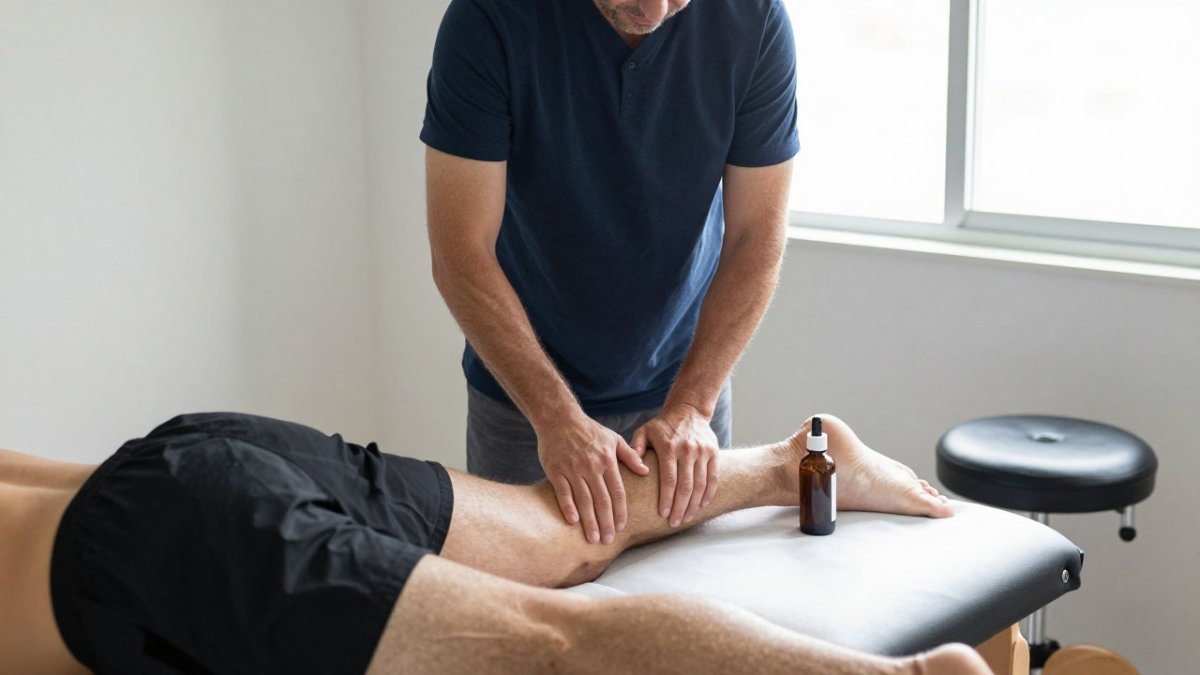
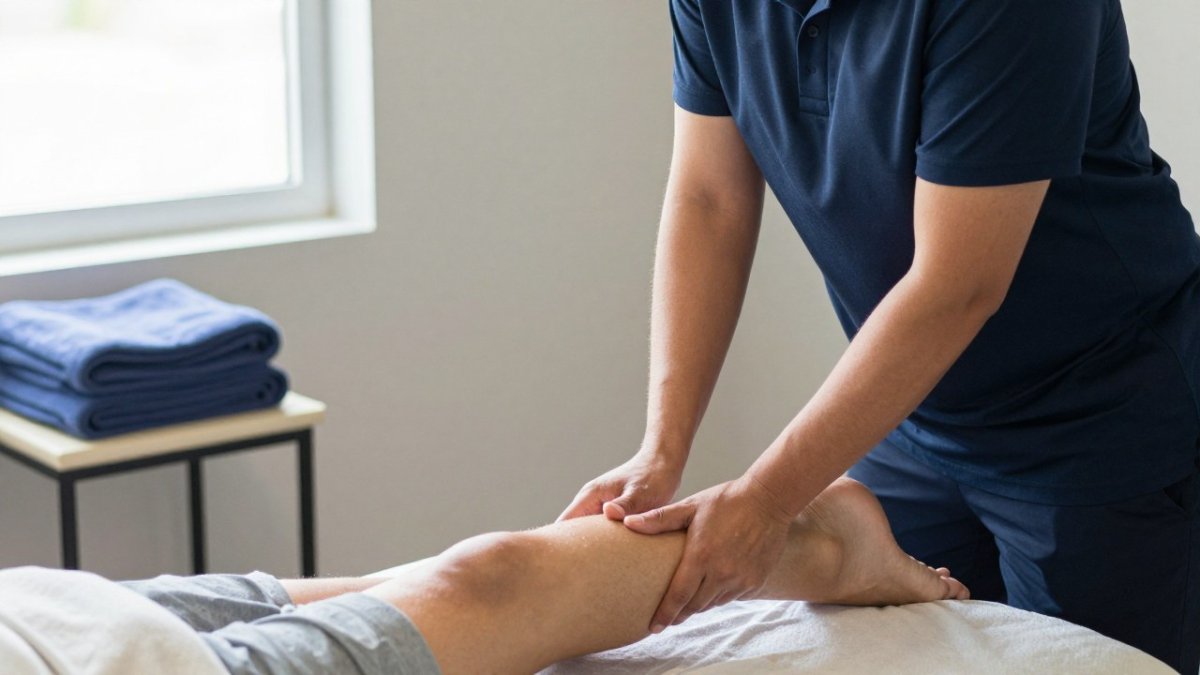
Sports massage is a hands-on treatment that works on muscle tissue, fascia, and connective tissue after exercise or injury. It is not a single technique. Therapists blend deep-tissue work, trigger-point therapy, and targeted pressure to match what your body needs that day.
So what does the research actually show? A 2025 review in the International Journal of Therapeutic Massage & Bodywork found that deep-tissue massage improved muscle recovery, performance, and flexibility (deep-tissue massage recovery review).
Does Massage Help Muscle Recovery After a Workout?
Yes, but not in the way most people assume. Massage helps you feel better and move better after a workout. It does not appear to make you stronger or faster on its own.
A 2020 systematic review in the British Journal of Sports Medicine Open found no evidence that sports massage directly improves performance. It did find that massage may somewhat improve flexibility and delayed-onset muscle soreness, or DOMS (sports massage systematic review).
The lead author put it plainly:
"Although our study finds no evidence that sports massage improves performance directly, it may somewhat improve flexibility and DOMS." -- HL Davis (British Journal of Sports Medicine Open, 2020)
Here is what that means in practice:
- Soreness: Massage may take the edge off DOMS, the ache that shows up a day or two after hard training.
- Flexibility: Range of motion often improves after a session.
- Performance: Do not expect massage alone to shave time off your run or add weight to your lifts.
What the Evidence Says About Soreness, Flexibility, and Performance
The evidence is more mixed than most recovery guides admit. That is not a reason to skip massage. It is a reason to use it for the right reasons and to calibrate your expectations.
A 2008 review of massage in sports performance and rehabilitation reported that participants receiving massage had significant improvements in neck extension and shoulder abduction by the end of the study (massage in sports performance and rehabilitation).
Across systematic reviews, the pattern is consistent: massage produces a small-to-moderate reduction in delayed-onset muscle soreness (DOMS) and a modest improvement in flexibility, but the effect on direct performance measures like sprint speed, jump height, or strength is not reliably demonstrated. The variation between studies is large, different massage styles, durations, pressures, and timing relative to exercise make it hard to pool results into a single number. A realistic reading is that massage may reduce soreness by a noticeable but not dramatic margin, and that individual response varies widely.
Popular claims deserve scrutiny too. The idea that massage speeds recovery by flushing out lactic acid is widely repeated, but the mechanism is not established by the evidence.
What the evidence supports:
| Outcome | What Research Suggests | Realistic Expectation |
|---|---|---|
| DOMS and soreness | Possible modest improvement | Less ache, not zero ache |
| Flexibility and range of motion | Some improvement | Easier movement after sessions |
| Direct performance | No clear evidence | Do not rely on it alone |
| Recovery after injury | Mixed, promising in some reviews | Pair with a full rehab plan |
| Lactic acid clearance | Not supported as a mechanism | Soreness is not a lactate issue |
Watch out: if a therapist or marketer promises that massage will "flush toxins" or "reset" your muscles, treat that as a red flag. The honest claim is narrower: massage can help you feel better and move more comfortably, but it is not a performance enhancer on its own.
Is Sports Massage Painful?
Sports massage can be uncomfortable, especially deep-tissue work on tight or damaged muscle. It should not be sharply painful. Good treatment intensity is a conversation, not a test of endurance.
Expect these sensations:
- Firm pressure on knots and trigger points
- A dull ache that fades as tissue releases
- Mild post-treatment soreness for a day or so
Tell your therapist if pressure crosses from productive discomfort into sharp pain. That signal matters. It protects tissue and keeps the session useful.
Deep Tissue Massage Recovery Time: What to Expect
Mild soreness after a deep-tissue session is possible and typically settles over a day or two. Individual timelines vary. That timeline is a general pattern, not a guarantee, pressure, duration, your training load, and individual sensitivity all shift it.
Plan around it:
- Hard training days: schedule deep work after your hardest session, not before a competition.
- Pre-event massage: keep it lighter and shorter.
- Post-event massage: wait a day if tissue is swollen or bruised.
- Return to training: if soreness is still limiting movement after 48 hours, treat that as a signal to reduce intensity rather than push through.
Watch out: heavy deep-tissue work right before a race can leave you feeling flat. Timing matters as much as pressure.
When massage may be inappropriate. Sports massage is not risk-free. Avoid deep work over areas with acute inflammation, open wounds, fractures, or suspected muscle tears. If you have a bleeding disorder, are taking blood thinners, or have a history of deep vein thrombosis, check with a clinician first. Massage should also be avoided over areas with active infection or unexplained swelling.
Expected tenderness versus warning signs. It is normal to feel a dull ache for a day or two after deep work. Seek clinical advice if you notice sharp pain, spreading redness, heat, fever, numbness, or swelling that worsens rather than settles. Those are not typical post-massage sensations.
How massage compares with other recovery methods. Massage is one option among several. Active recovery (light movement), sleep, hydration, compression garments, and stretching all have roles, and the evidence for each varies. For soreness relief and perceived recovery, massage is a reasonable choice; for measurable performance recovery, sleep and adequate nutrition matter more. If your goal is injury rehabilitation, massage should sit inside a plan built by your care team, not replace it.
Personalizing timing and pressure. Match the session to your goal: lighter, shorter work before an event; deeper work after hard training; and modified pressure when you are sensitive or in rehab. Tell your therapist what you want the session to accomplish, relaxation, soreness relief, or rehabilitation, because that changes how they work.
How Often to Get a Deep Tissue Massage
Frequency depends on your training load and goals. How often to book depends on your training load and goals; a care provider can recommend a schedule that fits your situation.
- Maintenance: every 3 to 4 weeks
- Heavy training: every 1 to 2 weeks
- Injury rehab: set by your care team
If you deal with recurring neck tightness between sessions, our guide on how to fix chronic neck stiffness walks through practical steps you can use at home.
When to Book Your Recovery Session
Book when soreness lingers longer than usual, when flexibility drops, or when training volume climbs. Those are the signals that tissue needs help.
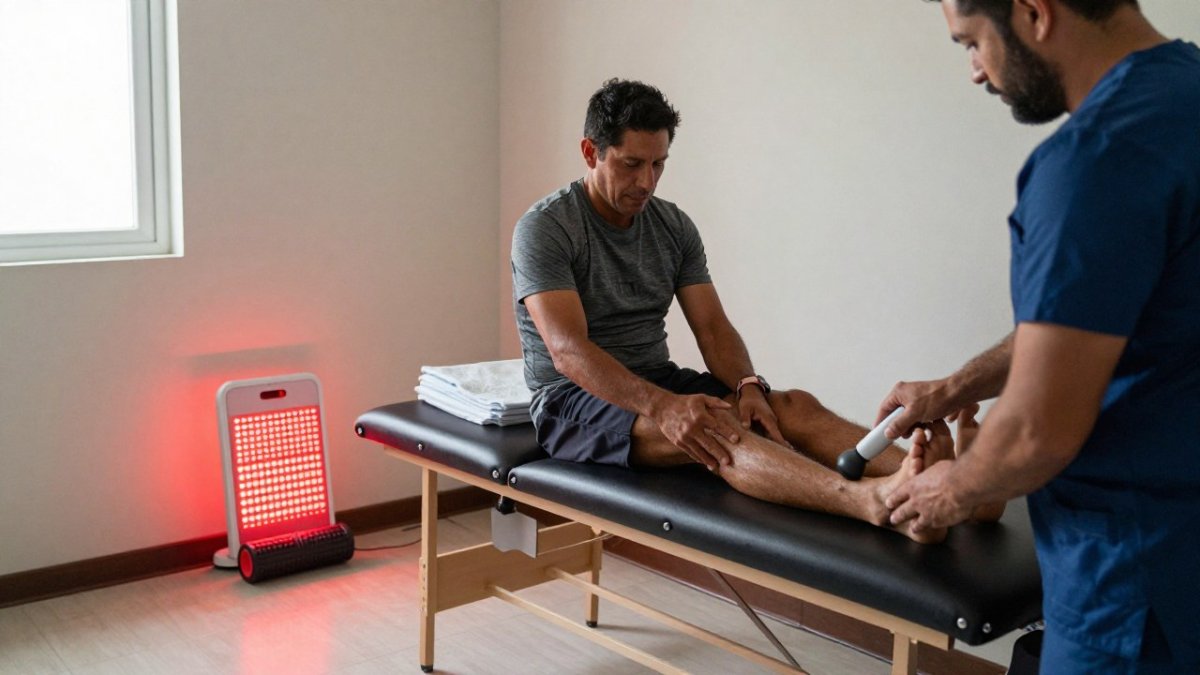
Dr. Manny Trevino, with over 30 years of clinical and military medicine experience, leads The Powerful Body: Chiropractic & Massage, which offers chiropractic care, massage therapy, and recovery technologies including shockwave and red light therapy.
Your body gives you signals before pain becomes a problem. Soreness that will not quit, tightness that limits your training, and slow recovery after workouts are worth addressing with a real plan. The Powerful Body: Chiropractic & Massage combines massage therapy, chiropractic care, and advanced recovery technology into one coordinated approach. Get started with The Powerful Body: Chiropractic & Massage and build a recovery plan that fits how you move.
Frequently Asked Questions
Do sports massages help with recovery?
Research points to modest recovery benefits rather than dramatic ones. A 2020 systematic review in the British Journal of Sports Medicine Open found no evidence that sports massage directly improves performance, but it may somewhat improve flexibility and delayed-onset muscle soreness. A 2025 review of deep-tissue massage reported improved muscle recovery, performance, and flexibility. Treat sports massage as one part of a recovery plan that includes sleep, nutrition, and load management.
What should you not do after a sports massage?
Skip intense training immediately after a deep session, since the tissue has just been worked and may feel tender. Avoid heavy stretching or foam rolling the same area right away, and give yourself time before a hot bath or sauna if you feel lightheaded. Drink water, keep the rest of the day moderate, and tell your therapist about any bruising, sharp pain, or unusual soreness that lasts more than a day or two so they can adjust pressure next time.
Is a 30-minute sports massage enough?
It depends on the goal. A 30-minute session can work well for a focused area, such as one calf or a tight shoulder, or for pre-event preparation. For full-body post-exercise recovery or chronic muscle tension across several areas, 60 minutes gives the therapist time to assess tissue and work without rushing. Ask what the session will cover before booking so the length matches your goal.
Can massage speed up recovery from a sports injury?
Massage can support recovery from a sports injury by easing muscle tension and improving flexibility, but it is not a substitute for diagnosis and rehabilitation. A review of massage in sports performance and rehabilitation reported some range-of-motion benefits among participants receiving massage. If you have a suspected strain, tear, or joint injury, get it assessed first. A provider with chiropractic and massage training can coordinate soft-tissue work with a broader rehab plan.