 blog
How to Tell If Chiropractic Care Is Safe for a Herniated Disc
Last Updated: November 5, 2026
Quick Summary
For most patients without progressive neurological symptoms, research does not show that chiropractic care raises the risk of a disc herniation requiring emergency surgery. One population-based study found no excess risk versus primary medical care, though the evidence has real gaps. Screening for neurological deficits is essential before any adjustment.
- A practitioner who adjusts your spine before taking a history and checking neurological signs is skipping an important safety step.
- Lumbar manipulation is considered safe when appropriately applied in cases without signs of increasing neurological deficit.
- Progressive weakness, saddle numbness, or loss of bladder or bowel control are contraindications, not inconveniences.
- Many patients notice some pain relief within the first few visits, while meaningful functional improvement often takes weeks.
- Cauda equina syndrome is a medical emergency that needs emergency care, not an appointment next Tuesday.
Table of Contents
- What a Lumbar Disc Herniation Actually Means for Your Spine
- Is Chiropractic Care Safe for Lumbar Disc Herniation? What the Evidence Shows
- What Happens During Chiropractic Treatment for a Herniated Disc
- Can a Chiropractor Make a Herniated Disc Worse?
- Herniated Disc: Chiropractor or Physical Therapy?
- How Long Does It Take for a Chiropractor to Fix a Bulging Disc?
- Red Flags That Mean You Need Medical Care First
- Building Your Personalized Plan at The Powerful Body
- Frequently Asked Questions
What a Lumbar Disc Herniation Actually Means for Your Spine
A lumbar disc herniation is a condition where the soft inner core of a spinal disc pushes through its tougher outer ring and presses on nearby nerve roots.
The answer starts with what has happened inside your spine.
Your discs sit between vertebrae like shock absorbers. Each has a soft center and a tough outer layer. When that outer layer weakens, the center can bulge outward.
Protrusion, Extrusion, and Nerve Root Compression
Not all herniations look the same, and the difference matters for treatment.
- Protrusion: the disc bulges but the outer ring stays intact
- Extrusion: the inner material breaks through the outer ring
- Nerve root compression: disc material presses directly on a nerve
Nerve root compression causes radiculopathy: shooting pain, numbness, or weakness traveling down a leg. A slipped disc with no nerve pressure behaves very differently from one that compresses a nerve root.
If you are comparing this with other spine issues, our guide on how to fix chronic neck stiffness walks through similar symptom patterns in the neck.
Is Chiropractic Care Safe for Lumbar Disc Herniation? What the Evidence Shows
For most patients without progressive neurological symptoms, research does not show that chiropractic care raises the risk of a disc herniation requiring emergency surgery. That is the central finding, and it is more reassuring than most people expect.
A population-based study led by CA Hincapié found no evidence of excess risk of acute lumbar disc herniation requiring emergency-department care and early surgery after chiropractic care compared with primary medical care, according to the PubMed study on chiropractic care and disc herniation risk.
Read that carefully. It does not say manipulation is risk-free. It says the compared groups did not differ in that specific outcome.
Where the Research Is Strong and Where It Falls Short
The evidence has real gaps. A 2023 clinical commentary in PMC notes that some publications describe spinal manipulation as having a very low risk of adverse events.
The American Chiropractic Association's review of the Hincapié study noted that no valid epidemiologic studies had assessed the risk of acute disc herniation after chiropractic treatment. Limited evidence is not proof of no risk.
| Evidence Question | What Research Shows | What It Means for You |
|---|---|---|
| Risk of emergency surgery after chiropractic care | No excess risk versus primary medical care in one population study | Reassuring but not definitive |
| Overall adverse event rate | Some publications describe very low risk | Not a quantified estimate |
| Risk specific to disc herniation | No valid epidemiologic studies at the time of review | Genuine evidence gap |
| Safety with neurological deficit | Manipulation considered safe only when appropriately applied | Screening is essential |
What Happens During Chiropractic Treatment for a Herniated Disc
A typical visit starts with a history and exam, not an adjustment.
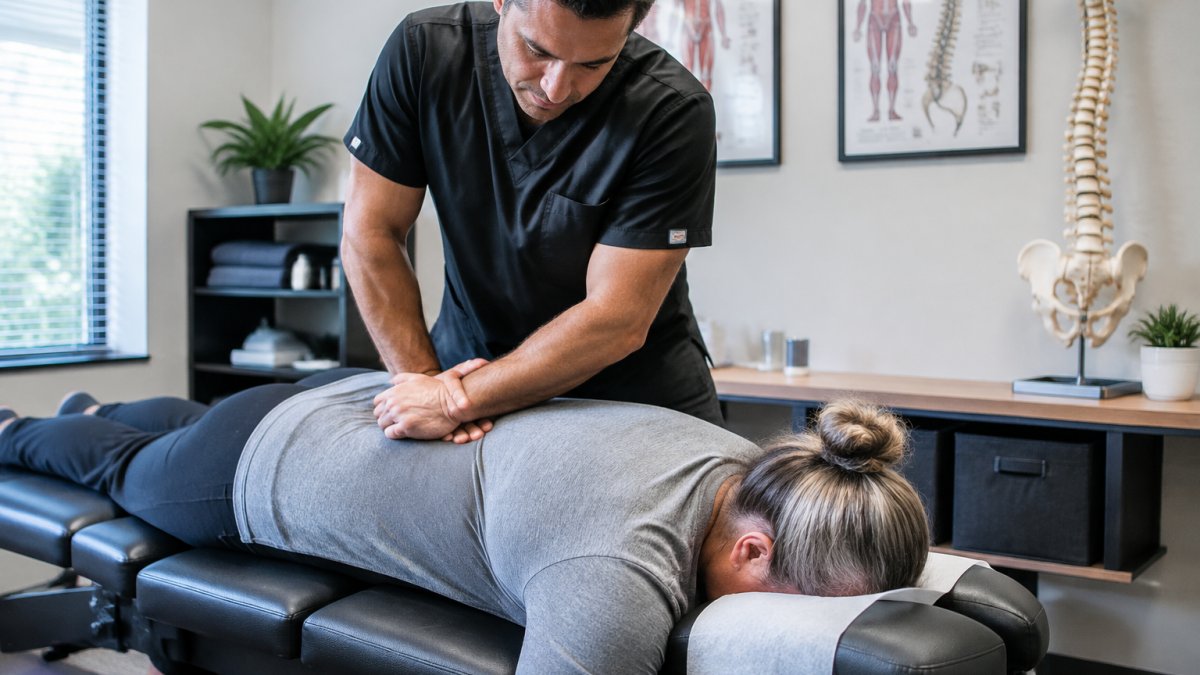
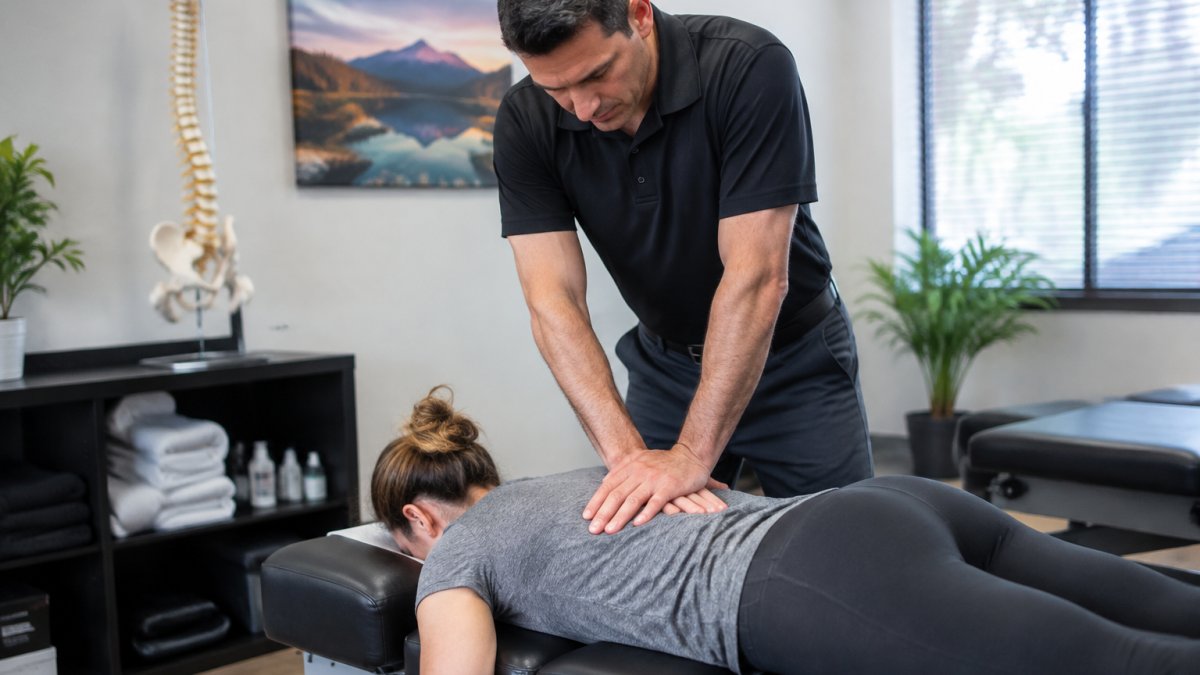
Chiropractic care for disc-related symptoms can involve several approaches, which should be discussed with a qualified provider during a consultation.
Watch out: a practitioner who adjusts your spine before taking a history and checking your neurological signs is skipping an important safety step.
Can a Chiropractor Make a Herniated Disc Worse?
Yes, in specific circumstances. Chiropractic care is not appropriate for every herniated disc, and a poorly screened adjustment can aggravate symptoms.
The clearest warning comes from clinical guidelines. A guideline excerpt on contraindications and complications states that lumbar manipulation is considered safe when appropriately applied in cases without signs of increasing neurological deficit. That phrase, "without signs of increasing neurological deficit," is the line that matters.
Contraindications by Lumbar Level and Neurological Signs
Risk is not uniform across the lower back. The lumbar spine has five disc levels, each next to different nerve roots and bony openings.
- L1-L2 and L2-L3: Less common sites of herniation. When they do occur, the compressed roots feed the upper thigh and hip flexors. Manipulation here is generally lower-yield for radicular symptoms, and hip or upper-lumbar pain is more often mechanical. Screening should rule out kidney, hip joint, and upper lumbar fracture causes before any adjustment.
- L3-L4: The exiting L3 root supplies the quadriceps and part of the knee reflex. A herniation here can produce thigh pain and a diminished knee jerk. Because the quadriceps are a major fall-prevention muscle, any measurable weakness is a reason to pause manipulation and get a medical evaluation.
- L4-L5: The most common herniation level. The traversing L5 root supplies the big toe extensor (extensor hallucis longus) and the muscles that lift the foot. A patient who cannot heel-walk or lift the big toe against resistance has a motor deficit, and that finding changes the plan. Central canal herniations at this level can also narrow the space available to multiple roots at once.
Beyond level, the shape of the herniation matters. A broad-based protrusion with an intact outer ring behaves very differently from a focal extrusion or a sequestered fragment that has broken free.
Location within the canal matters too. A paracentral herniation presses on the traversing root, while a foraminal herniation presses on the exiting root at that same level.
These are contraindications, not inconveniences:
- Progressive weakness in a leg or foot, especially foot drop or a new inability to heel- or toe-walk
- Worsening numbness in the saddle area
- Loss of bladder or bowel control
Herniated Disc: Chiropractor or Physical Therapy?
Neither option wins universally. The right choice depends on your symptoms, imaging, and response, and the more useful question is "in what order, and for what job."
Physical therapy leans on therapeutic exercise, biomechanics, and graded strengthening. Chiropractic care leans on spinal manipulation and manual therapy for pain and mobility. They are different tools aimed at different phases of recovery.
How the Two Actually Fit Together
A common pattern in disc-related care looks like this:
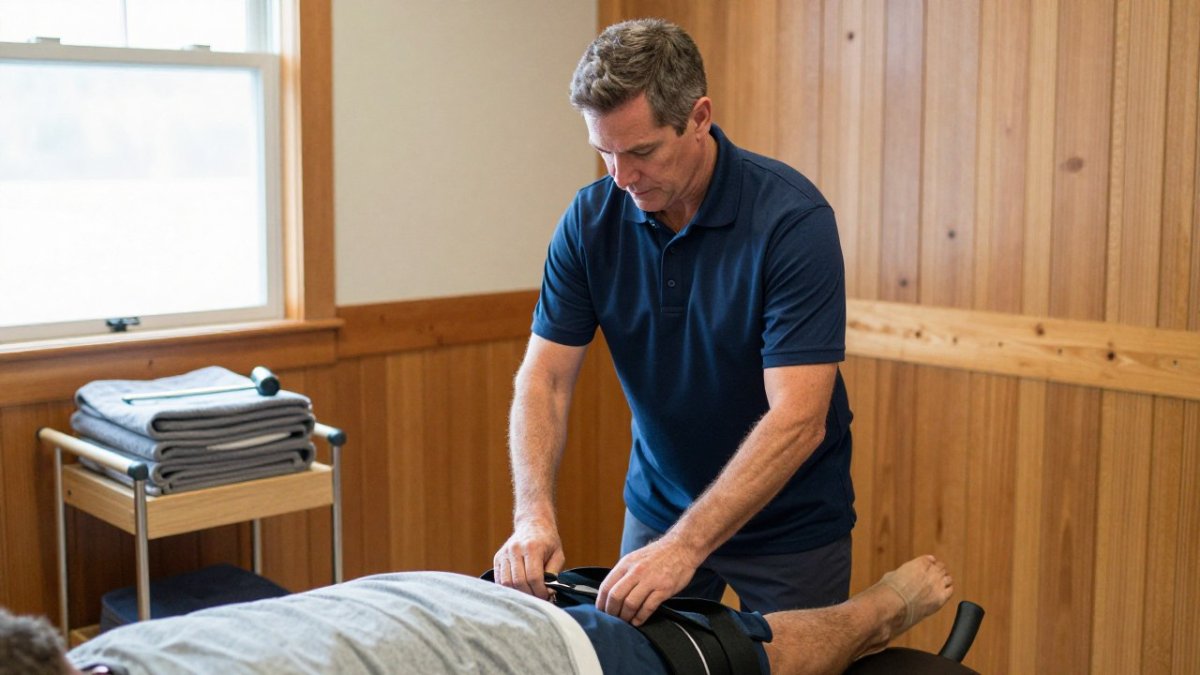
- Calm the nerve first. In the acute, highly irritable phase, the priority is reducing nerve root irritation and restoring tolerable movement. Manual therapy, traction-based techniques such as flexion-distraction, and positional relief strategies often carry this phase. High-velocity manipulation may be deferred if the nerve is highly sensitive.
- Restore motion and load tolerance. Once pain is settling, the job shifts to rebuilding strength, endurance, and movement quality. This is where physical therapy earns its place: graded core and hip strengthening, directional preference exercises, and a progressive return to bending, lifting, and sitting tolerance.
- Prevent recurrence. The final phase is about capacity, the ability of the spine and surrounding musculature to handle the loads of daily life. Patients who stop at pain relief without rebuilding capacity are the ones most likely to return with the same problem.
In practice, many clinics run these phases in parallel rather than in strict sequence. A patient might receive manual therapy twice a week while doing a home exercise program daily, then taper manual care as strengthening takes over. The key is that the plan changes as the patient changes, not that one discipline "wins."
Measuring Progress Instead of Assuming It
Progress should be measured, not assumed. Patient-reported outcome measures, or PROMs, are short, validated questionnaires that track pain, function, and mobility over time, such as the Oswestry Disability Index for low back function and a numeric pain rating scale for symptom intensity.
Ask your provider three concrete questions:
- Which outcome measure are you using, and how often will we repeat it?
- What specific functional milestone tells us this is working, walking distance, sit-to-stand tolerance, return to a particular activity?
- At what point do we change course if the numbers are not moving?
If the answer is "you'll just know," push back. A measured plan is also a safer plan, because a plateau or decline is visible early rather than discovered months later.
When to Choose One First
- Do I have neurological deficit or red flags? Get medical evaluation first, before either discipline.
- Is my main problem pain and stiffness, or strength and stability? The first leans toward manual care; the second leans toward physical therapy.
- Has one approach already failed for me? A failed course is information, it usually means the plan was incomplete, not that the whole category is wrong.
Patients seeking care for disc-related symptoms should discuss their options, including referral for orthopedic evaluation or imaging when appropriate, with a qualified provider. Watch out: a provider who insists their discipline alone is the answer for every disc patient is telling you more about their business model than about your spine.
How Long Does It Take for a Chiropractor to Fix a Bulging Disc?
There is no fixed timeline, and any provider who promises one is guessing. A bulging disc is a structural change, and structural changes heal on the body's schedule, not a marketing one.
Honestly: many patients notice some pain relief within the first few visits, while meaningful functional improvement often takes weeks of consistent care. Acute pain responds differently than chronic pain built up over years.
Red Flags That Mean You Need Medical Care First
Some symptoms mean stop and get medical care before any spinal manipulation. These are not subtle, and they are not negotiable.
- Cauda equina syndrome: sudden loss of bladder or bowel control, saddle numbness. This is a medical emergency
- Progressive neurological deficit: worsening weakness or foot drop
- Severe trauma: a fall or impact preceding the pain
Cauda equina syndrome needs emergency care, not an appointment next Tuesday. If you have these signs, go to an emergency department.
For everyone else, a careful exam and honest risk-benefit analysis is the right starting point.
Building Your Personalized Plan at The Powerful Body
The real question is not whether chiropractic care is safe in general, but whether it is safe and appropriate for your specific spine, symptoms, and goals.
That is what a personalized plan answers. Dr.
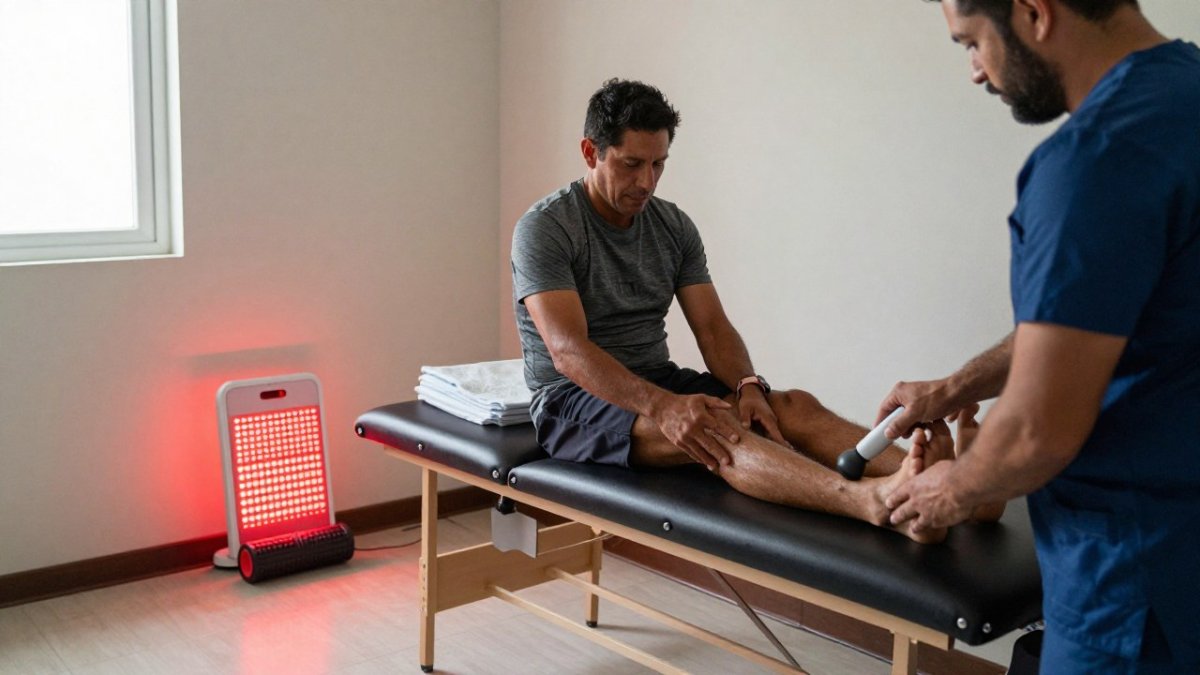
The Powerful Body offers an integrated approach combining chiropractic care, massage therapy, and recovery technologies including shockwave and red light therapy.
A full history and exam is a sensible starting point for any disc-related concern.
Frequently Asked Questions
What happens if you go to a chiropractor with a herniated disc?
A licensed practitioner typically starts with a history, orthopedic and neurological exam, and reviews any MRI or imaging you have. If your case is appropriate, treatment may include gentle spinal manipulation, flexion-distraction, and therapeutic exercise. A population-based study found no evidence of excess risk of acute lumbar disc herniation requiring emergency care or early surgery after chiropractic care compared with primary medical care, though that does not mean manipulation is risk-free. If red flags like cauda equina syndrome symptoms appear, your chiropractor should refer you for medical evaluation instead of adjusting.
Can a chiropractor make a herniated disc worse?
It is possible if manipulation is applied to a patient who should not receive it. Clinical guidance notes that lumbar manipulation is considered safe when appropriately applied in cases without signs of increasing neurological deficit, which means worsening weakness, numbness, or bowel and bladder changes are reasons to stop and get evaluated. Some publications describe spinal manipulation as having a very low risk of adverse events, but the evidence is not definitive. A proper screening exam and honest contraindications are what keep risk low.
Should I choose a chiropractor or physical therapy for a lumbar herniated disc?
Many patients benefit from both, and the right starting point depends on your exam findings. Chiropractic care and manual therapy can address spinal alignment and mobility, while physical therapy focuses on therapeutic exercise, core stability, and biomechanics. If you have significant neurological deficit or fail conservative care, an orthopedic evaluation and diagnostic imaging such as MRI may come first. Ask each provider how they coordinate with the other, and expect a plan that includes active exercise, not just passive adjustments.
How long does it take for a chiropractor to fix a bulging disc?
There is no fixed timeline, and honest providers will not promise one. Many patients notice some change in pain and mobility within a few weeks of consistent conservative care, but a bulging disc with radiculopathy or sciatica often takes longer, and progress is tracked with patient-reported outcome measures rather than visit count. Factors include the size and location of the protrusion, whether nerve root compression is present, your activity level, and how well you follow therapeutic exercise at home. Ask for a reassessment point so you can decide whether the plan is working.
A herniated disc is not something to guess your way through, and it is not something to fear into paralysis either. The middle path is a careful exam, honest answers about what the evidence does and does not show, and a plan built around your spine rather than a template. Get started with The Powerful Body and build a plan that treats the cause, not just the symptom.