 How-to
How Do You Fix Tight Hip Flexors From Sitting All Day?
Last Updated: October 30, 2026
Quick Summary
Tight hip flexors from sitting all day usually ease with short, frequent movement breaks, gentle stretches like the half-kneeling hip flexor stretch, and glute activation exercises such as glute bridges and clamshells. Holding each stretch for 30 to 60 seconds and standing up every 30 to 60 minutes helps most. Stop if you feel sharp pain.
- Stand and move every 30 to 60 minutes to interrupt sustained hip flexion.
- Hold the half-kneeling hip flexor stretch for 30 to 60 seconds per side, 2 rounds.
- Do glute bridges and clamshells to help the glutes share the load with the hip flexors.
- Adjust seat height so knees sit at or slightly below hip level.
Table of Contents
- Why Sitting All Day Tightens Your Hip Flexors
- Hip Flexor Stretches for Desk Workers
- Exercises for People Who Sit All Day
- Glute Activation and Why It Matters for Tight Hips
- How Often to Take Movement Breaks at Your Desk
- Telling Hip Flexor Tightness From Other Causes of Pain
- When to See a Doctor for Hip Pain
- Building Your Desk-Day Hip Routine and Booking Your Next Step
- Frequently Asked Questions
Why Sitting All Day Tightens Your Hip Flexors
Hip flexors are the muscles at the front of your hip that lift your thigh toward your body, and when they stay short for hours, people often describe them as feeling tight tight hip flexors. When you sit for hours, they stay in a shortened position for long stretches. Over time, many people feel that tightness as stiffness or pressure at the front of the hip.
Here is the practical picture. Sitting keeps your hips bent, so the hip flexors rarely get stretched. Your glutes, which often switch off when you sit, can also lose their share of the work. The result is a pattern that feels tight and tired by late afternoon.
Watch out: Stretching hard into pain can irritate the area further. Work within a comfortable range and stop if you feel sharp pain.
Hip Flexor Stretches for Desk Workers
These stretches are simple enough to do between tasks. Aim for a gentle pull you can feel, not a sharp one.
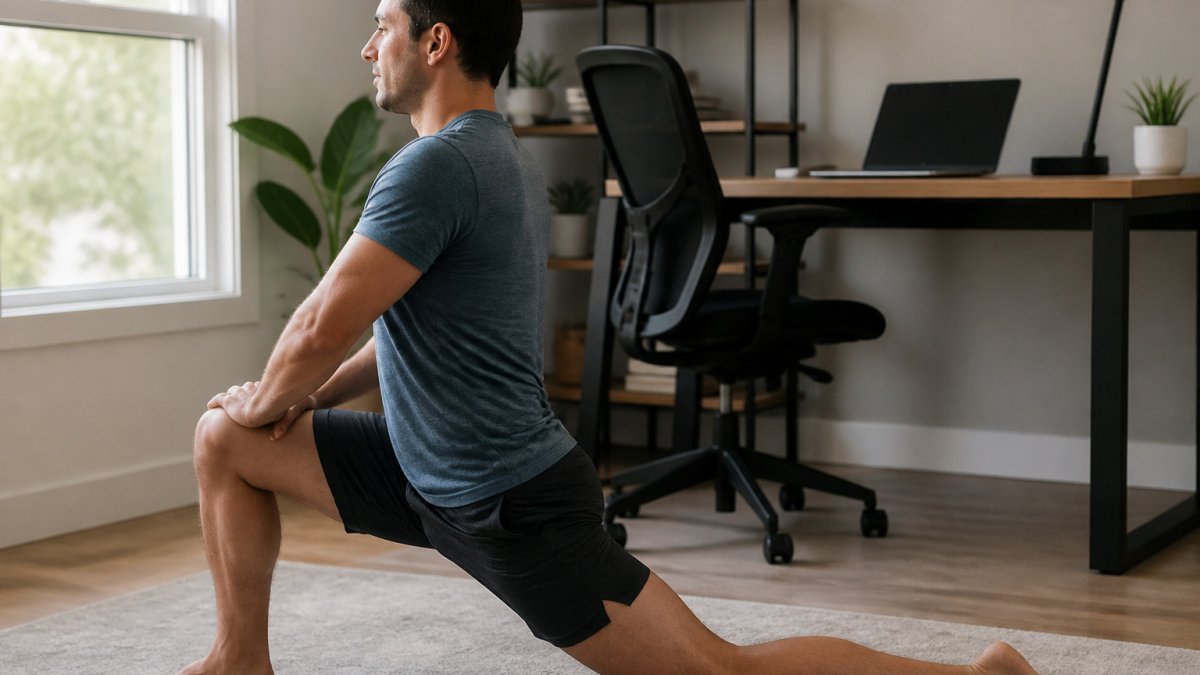
Half-Kneeling Hip Flexor Stretch
- Kneel on one knee with a folded towel under it.
- Keep your front foot flat and your knee over your ankle.
- Tuck your pelvis slightly and shift your weight forward.
- Hold for 30 to 60 seconds, then switch sides.
Repeat: 2 to 3 rounds per side.
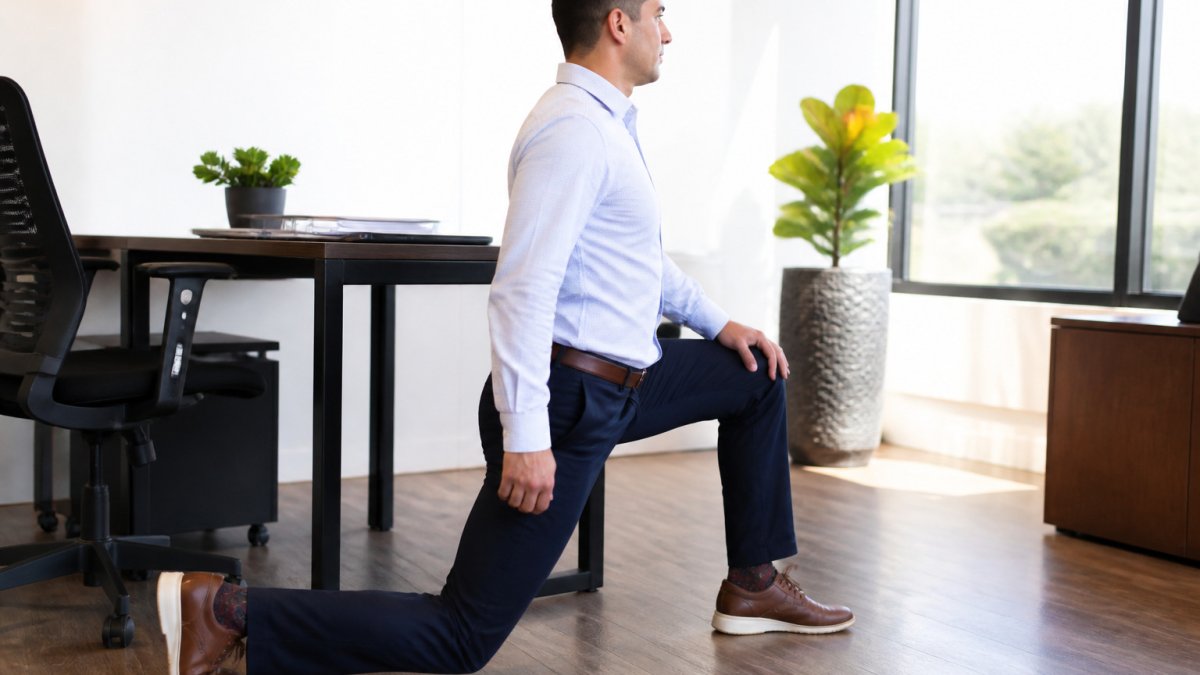
Lunge-Based Hip Flexor Variations
- Standing lunge hold: Step one foot forward, keep your back leg straight, and lean gently forward for 30 seconds.
- Reach-overhead lunge: Raise the arm on the back-leg side to add a longer stretch.
- Glute squeeze lunge: Squeeze the back glute to deepen the stretch without arching your lower back.
Exercises for People Who Sit All Day
Stretching alone rarely fixes the problem. Pair it with movement that keeps the hips strong and mobile, and follow a repeatable plan rather than random exercises. The routine below is a progressive, timed sequence you can do at home or near a desk in about 10 to 12 minutes.
The 10-Minute Daily Hip Routine
Do this once per workday, ideally in the late afternoon when stiffness peaks. Move through it in order; the first two moves warm up the hips before you load them.
- Standing hip circles (warm-up): Hold a counter or desk edge. Draw 10 small circles with one leg in each direction, then switch. Keep the circles slow and controlled, about 2 seconds per circle.
- Half-kneeling hip flexor stretch: 30 to 60 seconds per side, 2 rounds. Tuck the pelvis slightly and shift forward until you feel a gentle pull at the front of the hip. Do not arch the lower back.
- Glute bridge: Lie on your back with knees bent and feet flat. Lift the hips and hold for 2 seconds at the top. Do 10 to 12 reps, rest 30 seconds, then 2 more sets. Squeeze the glutes at the top rather than pushing through the lower back.
- Clamshell: Lie on your side with knees bent and hips stacked. Open the top knee like a clamshell while keeping the pelvis still. Do 12 to 15 reps per side, 2 sets. This wakes up the glute medius, which often goes quiet during long sitting.
- Pigeon pose (or figure-4 chair variation): Hold 30 to 60 seconds per side. If floor pigeon feels too intense, sit in a chair, cross one ankle over the opposite knee, and lean gently forward.
- Walking break: Finish with 2 to 5 minutes of walking. Movement itself helps the hips feel looser and reinforces the work you just did.
Form Cues and Safety Boundaries
- Work within a comfortable range. A gentle pull is fine; sharp pain is not.
- If a movement causes pinching at the front of the hip, reduce the range or skip it and try the chair figure-4 instead.
- Keep breathing. Holding your breath during a stretch usually means you are pushing too hard.
- Stop and reassess if pain spreads down the leg, causes numbness, or worsens over several sessions.
Regressions for Stiff or Sensitive Hips
If the full routine feels like too much, start with the warm-up, the half-kneeling stretch, and the walking break only. Add the glute bridge and clamshell in week two, and the pigeon pose in week three. This gradual build gives the hips time to adapt without flare-ups.
The routine below sequences the moves in order, with timing for each step.
| Step | What to do | Time or frequency |
|---|---|---|
| Standing hip circles | Draw small circles with each leg | 10 circles per direction, about 2 seconds each |
| Half-kneeling hip flexor stretch | Tuck pelvis and shift forward | 30 to 60 seconds per side, 2 rounds |
| Glute bridge | Lift hips and hold at the top | 10 to 12 reps, 2 to 3 sets |
| Clamshell | Open top knee, keep pelvis still | 12 to 15 reps per side, 2 sets |
| Pigeon pose or figure-4 | Hold stretch, lean forward gently | 30 to 60 seconds per side |
| Walking break | Walk to finish the routine | 2 to 5 minutes |
Glute Activation and Why It Matters for Tight Hips
Your glutes and hip flexors work as a team. When the glutes are weak or underused, the hip flexors often take on extra work. Waking up the glutes can ease the load on the front of the hip.
Try glute bridges and clamshells a few times a day. Start with small sets and build up as it feels comfortable. (Source: guidelines for physical activity)
How Often to Take Movement Breaks at Your Desk
A good rule for most desk workers is to stand and move every 30 to 60 minutes. Short, frequent breaks do more than one long break at the end of the day, because they interrupt the sustained hip flexion that drives stiffness in the first place.
Build a Movement-Break Schedule
Use a timer or calendar reminder and rotate through these micro-breaks so you are not doing the same thing every hour:
- Hour 1, Stand and stretch: 30 seconds of standing hip flexor stretch per side, then sit back down.
- Hour 2, Walk: 2 to 5 minutes to refill water, take a call standing up, or walk a hallway loop.
- Hour 3, Glute activation: 10 glute bridges or 10 standing hip circles at your desk.
- Hour 4, Posture reset: Stand, tuck the pelvis gently, and reach overhead for 15 seconds to lengthen the front of the hip.
Repeat the cycle through the workday. The goal is variety, not intensity, a few short breaks beat one long stretch session at 5 p.m.
Set Up Your Workstation to Reduce Hip Flexion
Small setup changes reduce how much time your hips spend bent:
- Seat height: Adjust the chair so your feet rest flat and your knees are at or slightly below hip level. A seat that is too high keeps the hips flexed more than necessary.
- Standing option: If you have a sit-stand desk, alternate roughly 30 minutes standing for every 30 to 60 minutes sitting. Start with shorter standing blocks and build up.
- Footrest: A footrest can reduce pressure at the front of the hip and make it easier to keep the pelvis neutral.
- Monitor height: Keep the top of the screen at or slightly below eye level so you are not slumping forward, which often pulls the hips into more flexion.
Track Your Progress
At the end of each week, rate your hip stiffness on a simple 0-to-10 scale at the same time of day. If the number is trending down, keep the schedule. If it is flat or rising, add one more walking break per day or move the routine earlier in the afternoon. Reassess after two to three weeks before changing anything else.
Telling Hip Flexor Tightness From Other Causes of Pain
Not all hip discomfort comes from tight hip flexors. Sciatic irritation, joint issues, and low back problems can feel similar. A simple way to start is to notice where the pain sits and what makes it change.
Hip flexor tightness usually feels like a pull or pressure at the front of the hip. It often eases with stretching and movement. Pain that is sharp, spreads down the leg, or gets worse with activity deserves a closer look.
When to See a Doctor for Hip Pain
See a healthcare provider if hip pain lasts more than a few weeks, wakes you at night, causes weakness or numbness, or follows an injury. Pain that keeps returning despite regular stretching also warrants an evaluation.
This article shares general information only. A qualified professional can assess your specific situation.
Building Your Desk-Day Hip Routine and Booking Your Next Step
Start with one stretch and one movement break each hour. Add glute work two or three times a day. Track how your hips feel after a week and adjust from there.
If the tightness keeps coming back, book a consultation with our team to talk through your options and get a plan built around your body.
Frequently Asked Questions
How do you stretch tight hip flexors?
A common starting point is the half-kneeling hip flexor stretch. Kneel on one knee with the other foot forward, keep your torso upright, and gently shift your hips forward until you feel a stretch at the front of the hip of the kneeling leg. Hold for 30 to 60 seconds, then switch sides. Stop if you feel sharp pain, numbness or tingling. Stretching works best combined with regular movement during the day and some strengthening of the glutes, rather than as a one-time fix. If discomfort persists, a qualified provider can assess your specific situation.
Why does my hip hurt after sitting?
Prolonged sitting keeps the hip flexors in a shortened position for long periods, which can make them feel tight or stiff when you stand up. The glutes may also become less active during extended sitting, shifting load to other structures. Hip stiffness after sitting is common and often eases with standing, walking and gentle movement. Persistent, sharp, or worsening pain, or pain that wakes you at night, should be evaluated by a healthcare professional rather than managed with stretching alone.
How often should you take movement breaks when working at a desk?
Many people find it helpful to stand, walk briefly or do a few gentle movements about once an hour. Even two to three minutes of standing and walking around can reduce the feeling of stiffness that builds from sitting. Setting a timer or pairing breaks with routine tasks, such as getting water or a phone call, makes the habit easier to keep. The right frequency depends on your work and comfort, so adjust it as you learn what helps you feel best.
When should I see a doctor for hip pain?
See a healthcare professional if your hip pain is severe, persists beyond a few weeks despite rest and gentle movement, is accompanied by fever, swelling, redness or inability to bear weight, or follows an injury. Numbness, weakness, or pain that radiates down the leg also warrants an evaluation. Stiffness that is mild and improves with movement is often manageable at home, but any symptom that worries you deserves professional assessment. Book a consultation with a qualified provider for a personalized evaluation.