 blog
Is Shockwave Therapy Worth It for Chronic Plantar Fasciitis?
Last Updated: November 4, 2026
Quick Summary
Shockwave therapy can be worth it for chronic plantar fasciitis when it's matched to the right patient and paired with real aftercare, but results are not guaranteed. Research is mixed, so a clinician should help you weigh the type, cost, and your treatment history.
- Focused shockwave targets a precise depth at the heel, while radial shockwave spreads energy over a wider area.
- There is no universal session count; your clinician should determine the appropriate number for your case.
- Sessions are short but often uncomfortable, and you'll need a series spaced about a week apart.
- Ask for the full-course total in writing before you start, not just the per-session price.
- Temporary soreness, redness, and mild swelling after a session are normal; report pain that doesn't settle.
Table of Contents
- What Shockwave Therapy Does for Chronic Plantar Fasciitis
- How Many Sessions of Shockwave Therapy for Plantar Fasciitis Do You Need?
- Shockwave Therapy Plantar Fasciitis Success Rate: What the Evidence Shows
- The Cost of Shockwave Therapy for Plantar Fasciitis
- Shockwave Therapy vs Surgery for Plantar Fasciitis
- Risks, Side Effects, and Whether Treatment Can Make It Worse
- Book a Consultation to See If Shockwave Fits Your Heel Pain
- Frequently Asked Questions
What Shockwave Therapy Does for Chronic Plantar Fasciitis
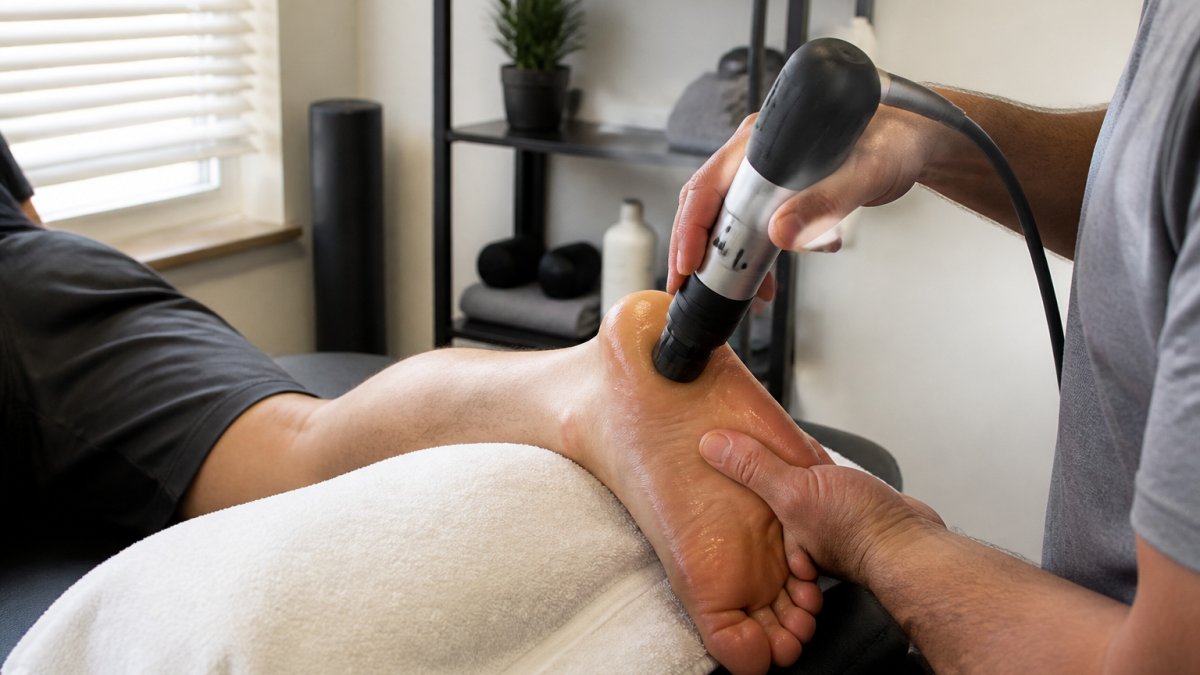
Shockwave therapy is a non-invasive treatment that sends high-energy sound waves into damaged tissue to trigger healing. For chronic plantar fasciitis, the goal is to break up scar tissue and restart the body's repair process in the plantar fascia.
Is shockwave therapy worth it for chronic plantar fasciitis? The answer depends on which type you get, how long you've had symptoms, and your overall situation. A clinician can help you weigh whether it fits your case.
Chronic heel pain is often associated with thickened, poorly healing tissue. Researchers describe shockwave as creating controlled micro-trauma that may stimulate circulation and tissue repair in that area.
A 2020 study on shockwave therapy for plantar fasciitis concluded the treatment was effective for pain, function, and quality of life under the protocol studied.
Focused vs Radial Shockwave: Why the Type Matters
Not all shockwave devices work the same way, and this is where most guides get vague.
- Focused shockwave delivers energy to a precise depth. It targets the fascia attachment at the heel.
- Radial shockwave spreads energy over a wider area and tends to feel more superficial.
The evidence reflects that difference. A 2017 meta-analysis on ESWT for plantar heel pain described the effectiveness of general ESWT, including focused and radial wave therapy, as uncertain. Older research is more upbeat: a 2002 meta-analysis of directed shockwave treatment called directed treatment at the plantar fascia attachment safe and effective for chronic proximal plantar fasciitis.
The type and protocol of treatment appear to matter more than the device label.
How Many Sessions of Shockwave Therapy for Plantar Fasciitis Do You Need?
Protocols generally involve a series of sessions rather than a single visit. The exact number depends on your symptoms, how long you've had them, and how your tissue responds. A clinician can advise on an appropriate plan for your case.
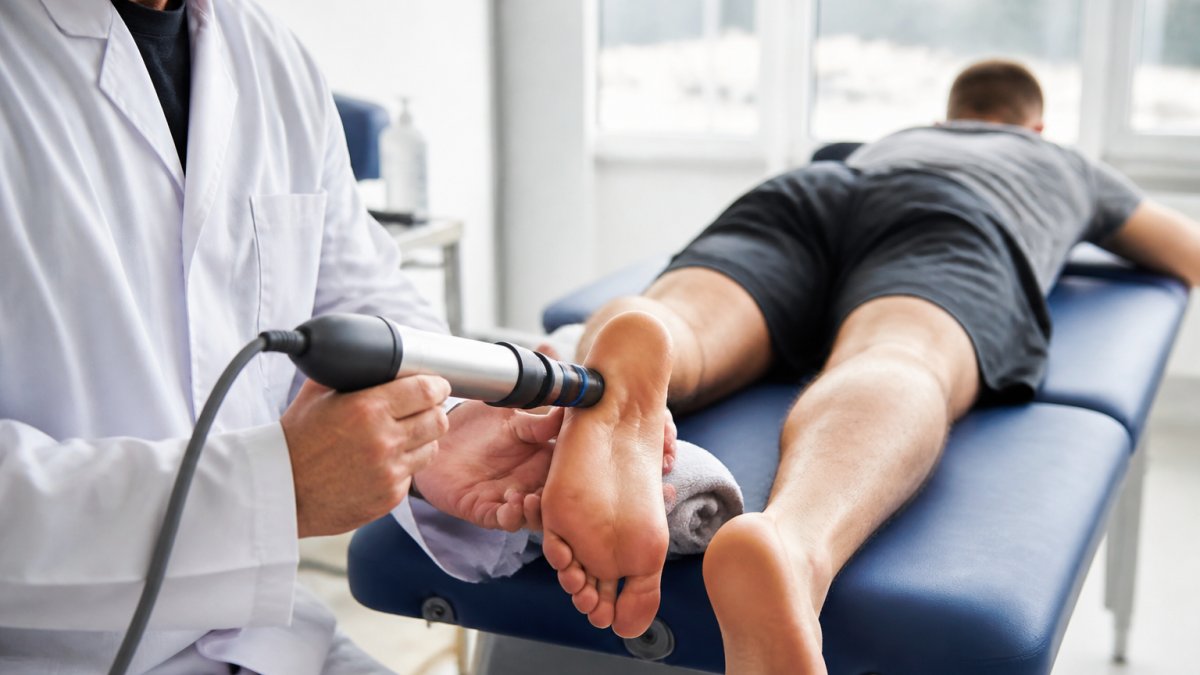
There is no universal count, and the appropriate number of sessions should be determined with your clinician.
What a Typical Treatment Protocol and Aftercare Look Like
Treatment sessions are generally brief, and some discomfort during treatment is commonly reported.
Aftercare matters as much as the session itself:
- Skip high-impact activity for a day or two
- Ice the area if it feels sore
- Keep up calf and plantar fascia stretches
- Wear supportive footwear, not worn-out flats
- Report any sharp or lasting pain before your next visit
Shockwave Therapy Plantar Fasciitis Success Rate: What the Evidence Shows
There is no single success rate to quote. Research on shockwave for plantar fasciitis is mixed.
A 2022 study by J. Kapusta and colleagues reported reduced pain in amateur runners with plantar fasciitis, though the published summary gives no effect size. Individual results vary.
What most guides miss is the difference between "statistically significant" and "you feel better." Ask your provider what functional improvement they actually track.
The Cost of Shockwave Therapy for Plantar Fasciitis
Cost is an important factor in deciding whether shockwave therapy is right for you. Pricing varies, and the structure below describes common considerations.
How shockwave is priced. Shockwave is often billed per session, and some providers offer a discounted rate for a prepaid series. Your total depends on session price and the number of sessions, plus any separate re-evaluation fees. Please request a quote for your specific plan.
Because per-session prices can vary between providers, ask for the full-course total, not just the per-visit number.
Insurance coverage. Coverage for shockwave therapy varies by plan and may depend on how the service is coded and whether it is considered medically necessary for your case. Do not assume your plan covers it, verify with your insurer before your first session.
Five questions to ask before you commit:
- Is this billed as a covered service or self-pay, and what CPT code will you use?
- What is the total for the full recommended series, not just one session?
- Is there a prepay discount, and is it refundable if I stop early?
- Does the price include re-evaluation visits and aftercare guidance?
- If I see no change after the first few sessions, what's your policy on stopping?
Best for: patients who want a non-invasive option before considering surgery and can absorb an out-of-pocket course of treatment. Skip if: you need a guaranteed outcome, your plan won't cover it and the full-course cost is a stretch, or you can't commit to the full session series.
Watch out: ask for the full-course total in writing before you start, rather than relying on a single per-session price.
Shockwave Therapy vs Surgery for Plantar Fasciitis
Surgery is generally considered after conservative care has been tried. Shockwave is a non-invasive option that is typically considered earlier in that sequence. But the more useful question isn't which is 'better', it's which fits your situation right now.
The trade-off in plain terms. Surgery can release the fascia directly and may offer a more definitive result for some patients, but it carries risks and requires recovery. Shockwave is generally considered lower in risk, with variable results that may require a full series of sessions before benefit is assessed.
A practical decision framework. Work through these in order:
- How long have you had it? Chronic, thickened, poorly healing fascia is the profile where shockwave tends to make the most sense. Early, acute heel pain often responds to simpler measures first.
- What have you already tried? If stretching, strengthening, orthoses, and footwear changes haven't moved the needle over several months, shockwave becomes a reasonable next rung. If you haven't tried them, start there.
- What does the evidence actually support? Research on shockwave for plantar fasciitis is mixed, and outcomes and follow-up periods vary between studies. Results are not guaranteed.
- Can you tolerate the discomfort and the time? Sessions are short but often uncomfortable, and you'll need a series spaced about a week apart. If your schedule or pain tolerance won't allow that, the math changes.
- What's the out-of-pocket cost? If insurance does not cover it, request a full-course quote and weigh it against the likelihood of benefit for your specific case.
Non-invasive options are often considered first, with realistic expectations. Any treatment decision should be matched to your history, prior treatments, and budget through a consultation with a qualified professional.
Watch out: be cautious of any provider who presents shockwave as a guaranteed alternative to surgery.
Here is how the two options compare on the points the article raises.
| Factor | Shockwave therapy | Surgery |
|---|---|---|
| Invasiveness | Non-invasive | Invasive, requires recovery |
| Where in the sequence | Typically considered earlier | Generally after conservative care |
| Risk level | Generally considered lower in risk | Carries risks and requires recovery |
| Results | Variable; may need a full series before benefit is assessed | May offer a more definitive result for some patients |
| Session spacing | Series spaced about a week apart | Not stated |
| Cost | Out-of-pocket if insurance does not cover it | Not stated |
Risks, Side Effects, and Whether Treatment Can Make It Worse
Can shockwave therapy worsen plantar fasciitis? It's uncommon, but temporary soreness, redness, and mild swelling after a session are normal. A 2017 review of ESWT complications described the treatment as apparently effective and assumed safe, while noting that systematic reviews of complications had not been available.
That gap is worth respecting. Bruising and brief pain flares can happen. The published literature on serious complications is limited, so the risk should be discussed with your provider.
If pain spikes and doesn't settle within a few days, tell your provider. Don't self-diagnose or keep going on your own.
Book a Consultation to See If Shockwave Fits Your Heel Pain
Chronic heel pain rarely has one fix. The honest answer to whether shockwave therapy is worth it for chronic plantar fasciitis is: it can be, when it's matched to the right patient and paired with real aftercare.
At The Powerful Body: Chiropractic & Massage, Dr. Manny Trevino brings over 30 years of clinical and military medicine experience. The practice offers an integrated approach that combines chiropractic care, massage therapy, and advanced recovery technologies, including shockwave and red light therapy.
To learn more or book, visit The Powerful Body: Chiropractic & Massage website for current information.
Frequently Asked Questions
Does shockwave therapy always work for plantar fasciitis?
No. The evidence is mixed. A 2020 study concluded shockwave therapy was effective for pain, function, and quality of life under the protocol studied, and a 2022 study reported reduced pain in amateur runners. But a 2017 meta-analysis described the effectiveness of general ESWT, including focused and radial wave therapies, for plantar heel pain as uncertain. Outcomes vary between patients, which is why a proper evaluation before starting matters.
Can shockwave therapy make plantar fasciitis worse?
Temporary soreness during and shortly after a session is common and usually settles. A 2017 review described ESWT as apparently effective and assumed safe for plantar fasciitis, while noting that systematic reviews focused on complications had not been available. That gap means safety claims should be read with some caution. If pain increases sharply or does not ease, tell your provider rather than pushing through it.
Is shockwave therapy covered by insurance for plantar fasciitis?
Coverage varies by plan. Ask your insurer directly whether the specific procedure code is covered and what your out-of-pocket responsibility would be. For current pricing, contact The Powerful Body: Chiropractic & Massage directly or visit its website for a quote before committing to a course of treatment.
How does shockwave therapy compare to surgery for chronic plantar fasciitis?
Shockwave therapy is non-invasive and is generally associated with temporary soreness rather than surgical recovery, while plantar fascia surgery involves an incision, a recovery period, and its own risks. Conservative treatment is commonly tried first, and a clinician can advise on the appropriate sequence for your case. A 2002 meta-analysis characterized directed shockwave treatment at the plantar fascia attachment as safe and effective for chronic proximal plantar fasciitis, though individual outcomes vary.
Ready to stop guessing about your heel pain? Book a consultation and let our team assess whether shockwave fits your recovery.